The decision, with conditions
- Choose this route when
- Choose the scheme after both people agree practical priorities, test their separate bedside and dressing needs, and approve one material relationship under the room's actual light.
- Use the alternative when
- Allow different but related bedside pieces or a limited ornamented plane when that meets distinct preferences without making every object carry half of each style.
- Stop or change the plan when
- Stop a compromise if agreed access, storage, or lighting needs remain unmet or if a finish quietly assigns maintenance to the person who did not choose that burden.
Compare the practical options
| Shared-bedroom disagreement | Agreement to make first | Design method |
|---|---|---|
| Traditional versus contemporary appearance | Which useful qualities each person values | One coherent bridge rather than averaged furniture |
| Different bedside routines | Each person's actual objects and light needs | Related but independently useful surfaces and controls |
| Different tolerance for ornament | Where detail contributes most | A restrained architectural frame or a lead headboard, not detail everywhere |
| Different maintenance expectations | Who can sustain the proposed care | Review textile and finish instructions before buying |
Begin with shared needs before negotiating style
Two people furnishing a bedroom may disagree about ornament, color, or the feeling of traditional and contemporary furniture. The familiar response is to compromise item by item, buying a slightly decorative bed, a neutral cupboard, and lamps that neither person particularly likes. The result can be visually cautious without feeling shared. A better starting point is the routine both people want the room to support.
Use the shared routine as the brief, not the style label. Agree what must be easy before choosing which familiar proportions, simple lines, or color relationships can support it.
Write three common priorities
Each person names their most important use needs. Agree a short shared list, then record which proposed items serve it; resolve functional conflicts before negotiating decorative details.
Keep the list short enough to guide decisions. It might include a clear night route, adequate closed storage, and a comfortable reading position. Decorative preferences remain valid, but they should not displace the agreed functions. When a proposed item conflicts with a priority, the reason to reconsider is explicit rather than personal. The room becomes a common project instead of a sequence of concessions.
Separate the bed's function from its profile
Choose the mattress and support system according to the sleepers and product requirements. Then consider the frame and headboard as the visible layer. A familiar lightly framed profile can coexist with plain bedding, while a simple upholstered form can sit within more traditional trim. Neither person needs to obtain every preferred reference in one object.
Test finished sitting height, outer dimensions, and access from both sides. A bed that looks balanced may leave one person with an awkward route or reach. Include the actual mattress thickness and bedside furniture in the trial. The practical sleeping arrangement should be resolved before spending time on decorative piping or the exact curve of a headboard.
Choose one shared material or color relationship
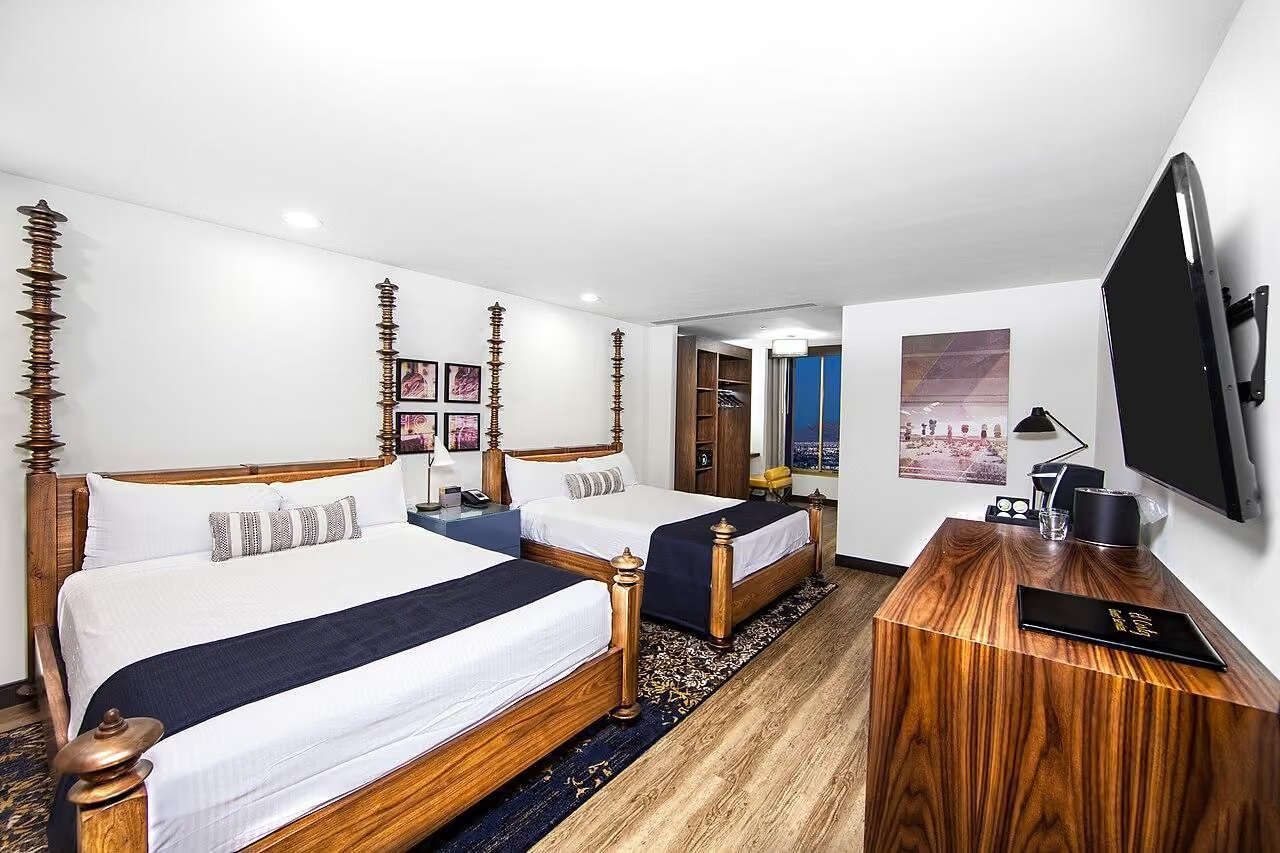
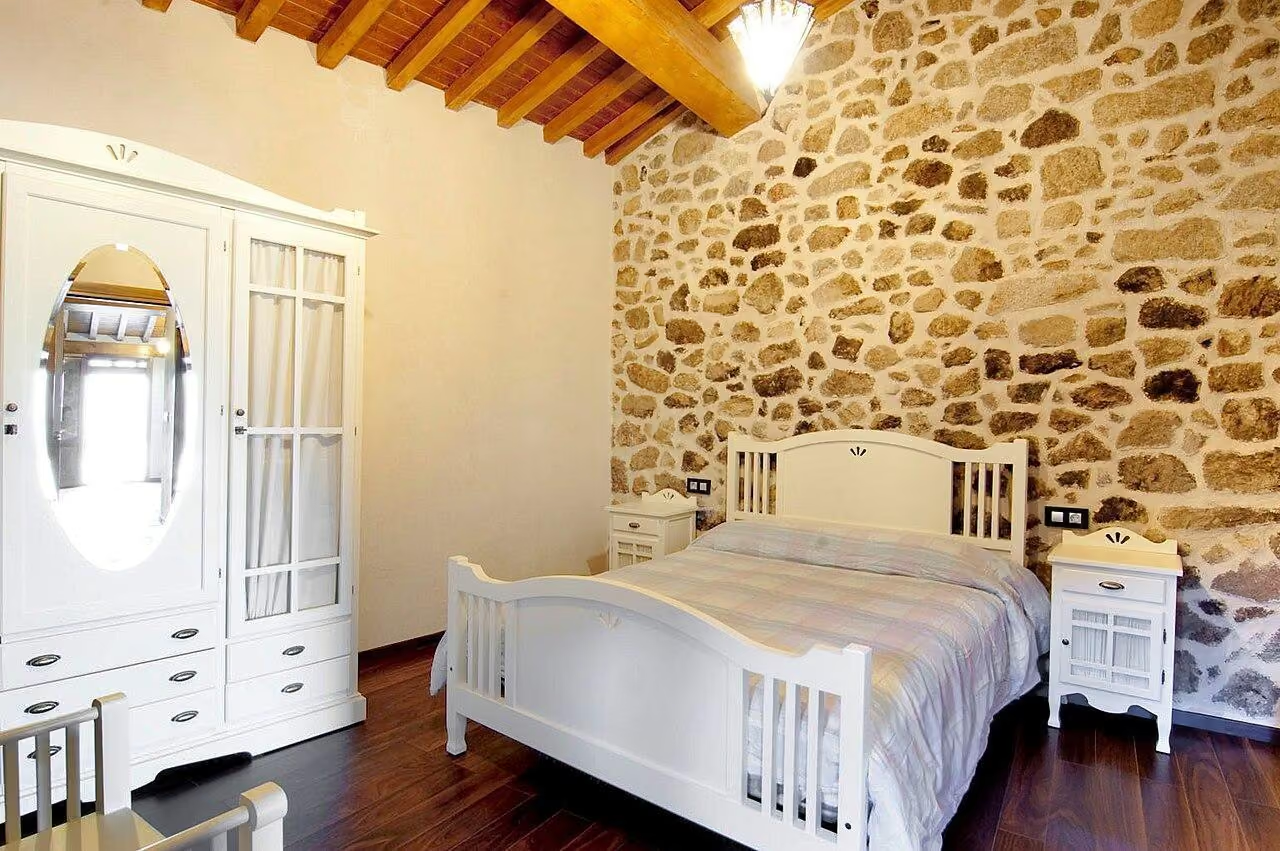
Review samples together in the room. A warm timber, a muted mauve, a related neutral value, or another agreed element can connect different furniture forms. The aim is a clear common thread, not a rule that every object must match. One person may prefer a more familiar bedside cupboard while the other uses a simpler table.
Avoid choosing all colors from tiny separate swatches. Place fabric, paint, timber, and the existing floor together under daylight and evening lamps. This turns a subjective argument into a concrete relationship that can be adjusted. A sample that neither person loves alone may work beautifully within the group, while a favorite color may need a smaller role.
For a fuller discussion of a shared color decision, explore A Colorful Room for Two People with Different Tastes.
Give each side a useful degree of independence
The two bedside inventories may differ. Measure them separately and choose surfaces or drawers that suit each person. Related proportions and a common lamp detail can keep the wall coherent without identical furniture. A bedroom can look settled while acknowledging that two people use it differently.
Independent lighting is especially important when schedules differ. Test the reading source and control from each pillow position, checking glare toward the other side. A shared decorative pendant does not replace that function. Plan power and cable access with appropriate professionals where changes are required, and keep ordinary controls understandable without a complex system.
To translate different nightly inventories into furniture, compare A traditional bedroom beyond the matching furniture set.
Decide where ornament belongs
If one person enjoys architectural detail and another prefers simplicity, allocate a clear place for each. A restrained wall profile can provide the familiar frame while furniture stays lighter. Alternatively, a more traditional headboard can sit against a plain wall. The room does not need ornament at every level to acknowledge that preference.
Use full-scale tape or paper mockups before adding permanent detail. A small profile can become busy when repeated around a modest room. View it from the bed and doorway, not only in a straight-on photograph. The right amount should support the shared atmosphere rather than demonstrate that a compromise has been evenly distributed.
Keep storage decisions specific
Count clothing, bedding, and daily equipment before selecting wardrobes or chests. A neutral-looking cabinet is not a successful compromise if it cannot hold the inventory. Decide which items should remain visible and which need closed storage. The agreement should include a realistic reset rather than assuming one person's organization habits will automatically become the other's.
Adjustable shelves, removable trays, and freestanding pieces can make the room more forgiving as routines change. Highly fitted interiors may be useful for a clear need, but they should not be chosen merely because custom work appears more complete. Preserve flexibility where the future inventory is uncertain. A shared room benefits from capacity to evolve.
Review care and cost together
Read the instructions for upholstery, timber finishes, and textiles before buying. A delicate surface may appeal to one person but create maintenance for another. Make the responsibility visible in the decision. The room should not look like a fair compromise while quietly assigning all its upkeep to one occupant.
Compare the complete cost of furniture, delivery, installation, lighting, and any restoration. A retained piece may provide emotional continuity, while a new item may solve a practical problem more clearly. Neither is automatically the better value. Agree where the budget produces the greatest shared benefit before spending it on details that merely signal a preferred style.
Test a whole day rather than a mood board
Walk through dressing, reading, bedtime, night movement, and the morning routine with the proposed arrangement. Notice who has to move or reach awkwardly. Use those observations to revise the plan before ordering fixed work. A mood board can communicate atmosphere, but the occupied sequence determines whether the room feels genuinely shared.
In a fictional evening, two different lamps dim independently beside related but not identical bedside pieces. The room feels coherent because the agreement is clear, not because every preference has been averaged. Confirm shared priorities, bed function, one connecting palette, personal needs, ornament, storage, care, and cost. A transitional bedroom works best when its flexibility reflects the people living within it.
Check, record, then decide.
A proposed worksheet for your own observations. Use consistent units for dimensions and keep the conditions with each record.
Shared practical brief
Where to check With both regular occupants discussing a complete evening and morning rather than separate mood boards.
- Record
- Each person lists priorities, then agree a short common set; record which proposed furniture decision serves or conflicts with each priority.
- Read the result
- The brief makes tradeoffs explicit, but it does not require identical preferences or prove an emotionally successful compromise.
- If it does not work
- Return to unresolved use needs before buying neutral items that neither person values simply because they create no immediate objection.
Independent sides within one room
Where to check At each bed approach, bedside surface, wardrobe, and reading position with the actual mattress represented.
- Record
- Measure outer footprints and clear approaches in centimeters; note differing inventories, reaches, light needs, and the proposed reset for each person.
- Read the result
- Visual symmetry cannot establish equal usefulness, and one person's routine should not silently define the other's necessary storage.
- If it does not work
- Use related different pieces and independent controls when identical furniture cannot satisfy both sides.
One connecting palette and upkeep
Where to check In the actual bedroom with fabric, paint, timber, and existing floor samples reviewed together.
- Record
- Note agreed relationships under daylight and lamps, cleaning requirements, maintenance responsibility, and ornament that can be tested reversibly at full scale.
- Read the result
- A shared sample preference does not make a delicate finish practical or show that all future substitutions preserve the agreement.
- If it does not work
- Simplify the permanent scheme and keep an approved reference when a decorative choice creates hidden work for only one occupant.
A practical trial
- Test both dressing sequences before finalizing storage appearance.
- Reach each reading control from the actual pillow arrangement.
- Review the complete installed budget against the agreed priorities rather than dividing it by style.
Compare the same scope
- Shared use priorities and personal bedside needs
- Coherent palette with a deliberate amount of ornament
- Storage, lighting, care responsibility, and total scope
Cost drivers to discuss: Custom joinery intended to reconcile incompatible requests; Independent light and outlet positions; Special-care fabric or retained-piece restoration.
Choose another route when: An item-by-item aesthetic compromise is unsuitable when it leaves agreed practical needs unmet or transfers the upkeep of a chosen finish to an unwilling occupant.
The download is a blank record template. Your completed notes remain wherever you choose to keep them; this page has no measurement-submission service.
Sources for this guide
Each reference’s supported point and limits appear beside the relevant passage above. Product documentation applies to the named product, rather than every similar item or the photographed room.
Source text checked November 4, 2026. Specifications can change; confirm the current instructions for the exact item before ordering.
Your questions, considered.
Where should a couple start when bedroom tastes differ?
Write a few shared functional priorities, such as clear access, useful clothing storage, and independent reading. Assess decorative options against that common brief.
Does a shared palette mean identical bedside furniture?
No. A related color, timber, or proportion can connect pieces that serve different inventories and reaches. Test each side separately before judging the whole wall.
How can traditional and simple preferences coexist?
Give ornament a clear limited role, such as restrained trim or a familiar headboard, while other forms remain quieter. Use full-scale trials instead of adding equal detail everywhere.
About this guide: written with AI assistance for TIANLICHUJU. These are general design ideas, not a measured survey or a completed client project. Any domestic vignette is fictional. Confirm product specifications, site dimensions and local requirements before construction; use qualified professionals for regulated work. Read our editorial approach or suggest a correction.