The decision, with conditions
- Choose this route when
- Choose the profile after a finished sample's approved cleaning method works at the recesses and the exact construction and handle suit the kitchen's busy wet and touched locations.
- Use the alternative when
- Use a simpler shallower frame or different pull when repeating the preferred detail would increase maintenance or make a heavy front difficult to operate.
- Stop or change the plan when
- Stop a front-only order when retained units are damaged, hardware compatibility is assumed, or vulnerable appliance and sink edges remain unresolved beneath the new appearance.
Compare the practical options
| Front detail | Sample or condition check | Decision before approval |
|---|---|---|
| Frame recess and inner corners | Use the intended cloth and approved care method | Choose a profile whose effort is acceptable |
| Sink or dishwasher edge | Ask about the specific construction and protection | Resolve vulnerable moisture locations |
| Knob or pull | Try wet-hand grip with the actual front load | Avoid decorative hardware that is awkward to use |
| New front on retained carcass | Confirm dimensions, drilling, weight, and hinge condition | Repair underlying problems before cosmetic renewal |
A framed front needs a practical profile
Traditional kitchen fronts can provide a familiar architectural rhythm through rails, stiles, and a recessed panel. That detail can feel settled without being elaborate. The practical question is how the profile behaves around the handle, sink, and cooking area. A front is touched and wiped repeatedly; the small recess that gives it character also becomes part of the cleaning routine.
Compare the exact construction and finished profile rather than the style label. Similar-looking doors can differ at the recess, joint, and coating that receive everyday wiping.
Identify the busiest contact areas
Observe where hands land while cooking and cleaning. Drawer pulls, bin storage, the sink cupboard, and frequently used food storage receive different levels of contact from reserve cupboards. A finish should be assessed in those locations, not only on a dry sample displayed at eye level. The most exposed front may determine whether the whole scheme feels practical.
Map water and grease exposure as well. A decorative rail directly beneath the sink edge may collect drips; a detailed front beside cooking may need more frequent wiping. These are reasons to ask better product questions rather than reject framed doors altogether. Placement, finish, and a restrained profile can make the same visual language much easier to maintain.
Compare shallow and deep recesses
Use the recommended method on full-depth samples, including inner corners. Judge the effort before repeating the detail across a whole run; a quieter profile may supply enough shadow.
Look at the samples from normal standing distance too. A simpler profile may provide enough shadow once repeated across several cabinets. Small details become more assertive in a full kitchen elevation. Do not assume that the most intricate sample will create the most refined room. Often the useful edit is to reduce the profile while keeping its proportions clear.
If the proposed recesses are fluted rather than framed, compare Keeping Deco kitchen fluting out of the grease zone.
Know the construction beneath the coating
Ask what the door is made from and how its components are joined. Solid timber, veneered products, and manufactured boards have different behavior and repair possibilities. A painted surface does not make the underlying construction irrelevant. The supplier should explain suitable cleaning, moisture limitations, and the process for addressing damage.
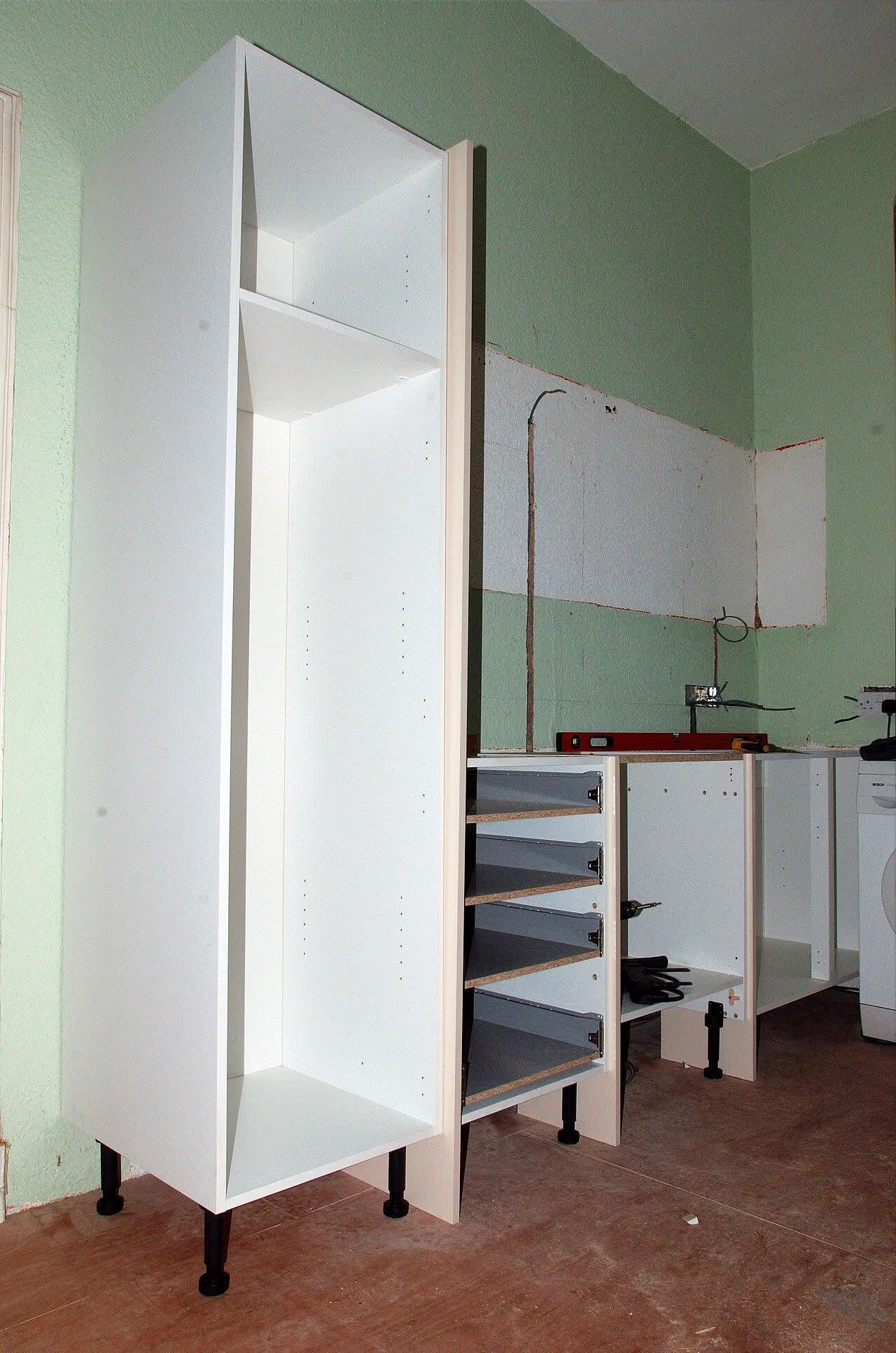
If fronts are being replaced on retained cabinets, confirm dimensions, hinge compatibility, weight, and drilling patterns with a competent installer. A familiar-looking door is not automatically compatible with an existing carcass. Check the structure and hardware before spending the budget on new visible surfaces. Decorative renewal should not conceal a problem that needs repair first.
Test handles with the actual front
A traditional knob or pull can provide a useful accent, but its grip must suit the door or drawer. Try a sample with wet hands and the expected load. A small knob may work on a light cupboard and be uncomfortable on a heavy integrated appliance. The handle should be chosen by task as well as appearance.
Position matters. A pull too close to a frame detail can leave little room for fingers, while a projecting handle can catch at a narrow route. Draw it in plan and elevation. Repetition can give the kitchen order, but the same position need not be forced onto every front if it compromises operation. Clear usability is a legitimate part of the visual design.
Keep the surrounding surfaces less demanding
Framed fronts already introduce a repeated pattern of lines. A quieter backsplash and worktop can let that rhythm remain legible. If the floor is also patterned, reduce other competing elements rather than adding another decorative band. The kitchen should have a hierarchy that remains calm once food, utensils, and appliances are visible.
Warm cream, muted green, dusty rose, and timber can support a traditional atmosphere without making it dark. Compare large samples under actual task light. Sheen and undertones can change the relationship substantially. A slightly different cabinet and wall value may be more convincing than attempting to match unrelated products perfectly.
Design the wet edges and appliance junctions
The front beside a dishwasher or below a sink may face conditions different from a remote cupboard. Ask the supplier and installer how vulnerable edges are protected and how appliances are coordinated. Follow the relevant product and installation requirements. A consistent decorative face should not erase a necessary technical detail.
Keep service access and appliance removal routes clear. A new plinth or decorative end panel should not trap equipment that may need attention. Ask how panels are removed and record the method. The traditional appearance can remain intact while the construction is straightforward to maintain. Hidden access is useful only when someone knows where it is and how it works.
While resolving appliance junctions, preserve the access described in A flush kitchen that can still be repaired.
Price finish preparation and future renewal
Compare quotations that include preparation, coating, hardware, installation, and adjustment. A low front price can omit the work needed to achieve a durable finish or fit the existing kitchen. If repainting is proposed, confirm substrate suitability and the required curing or use period. The practical disruption belongs in the decision.
Ask whether a damaged front can be repaired, recoated, or replaced independently. Keep paint references, samples, and hardware details. Later color matching can be imperfect, especially after years of use, so understand the options rather than assuming an invisible repair is guaranteed. A kitchen can age well when its renewal method is clear.
Choose the front after the cleaning trial
Review the full elevation and the sample-care result together. The selected profile should provide enough traditional character without creating work the household resents. If the deep detail is difficult on the sample, choose a simpler version now. The repeated front should feel like a useful familiar frame, not a daily reminder of a decorative compromise.
In a fictional morning, a drawer opens easily and a small spill wipes from a well-specified edge without ceremony. The room feels settled because its details work. Confirm exposure, profile depth, construction, handle grip, material hierarchy, wet junctions, installed scope, and repair. A traditional kitchen earns its longevity through practical decisions at the places touched most often.
Check, record, then decide.
A proposed worksheet for your own observations. Use consistent units for dimensions and keep the conditions with each record.
Busy-front exposure
Where to check At sink, bin, cookware, and integrated appliance fronts during ordinary kitchen use.
- Record
- Number fronts and note wet-hand contact, drips, grease, repeated wiping, and which bottom or side edges appear particularly exposed.
- Read the result
- The map identifies where specification matters most, not proof that a particular framed door will resist moisture or cleaning.
- If it does not work
- Request a suitable construction and edge detail for those locations before repeating the same decorative profile everywhere.
Recess cleaning comparison
Where to check On full-depth finished samples of the candidate frames, including inner corners and actual coating.
- Record
- Record profile dimensions in millimeters and try the approved cloth or tool; note recesses that remain inaccessible or awkward.
- Read the result
- An immediate care trial cannot establish coating life, but it can reject a profile whose basic maintenance is already unreasonable.
- If it does not work
- Choose a shallower simpler frame rather than assuming more ornament produces a more lasting traditional kitchen.
Handle and retained-carcass fit
Where to check At a representative door, loaded drawer, and appliance front on the actual cabinet system.
- Record
- Record grip, finger space, hole positions in millimeters, and installer-confirmed hinge compatibility; list any underlying damage separately.
- Read the result
- An attractive knob does not prove useful leverage, and a same-size front does not establish hardware compatibility.
- If it does not work
- Change the pull, specify compatible hardware, or repair the retained unit before ordering decorative replacement fronts.
A practical trial
- Review the full repeated front pattern, not only one appealing sample.
- Ask how edges beside the sink and dishwasher are protected and renewed.
- Include curing, installation adjustment, and making good in a repaint or replacement proposal.
Compare the same scope
- Exact front construction, frame, and coating
- Practical hardware for actual front loads
- Preparation, wet-edge coordination, fitting, and repair
Cost drivers to discuss: Complex profiles and corner preparation; Repairs around damaged retained units; Hardware conversion and finish matching.
Choose another route when: A detailed framed front is unsuitable where its recesses and coating demand cleaning or moisture vigilance that the real cooking routine cannot sustain.
The download is a blank record template. Your completed notes remain wherever you choose to keep them; this page has no measurement-submission service.
Sources for this guide
Each reference’s supported point and limits appear beside the relevant passage above. Product documentation applies to the named product, rather than every similar item or the photographed room.
Source text checked November 4, 2026. Specifications can change; confirm the current instructions for the exact item before ordering.
Your questions, considered.
Are framed kitchen doors difficult to clean?
It depends on actual depth, corners, coating, and exposure. Compare full-profile samples with the recommended method rather than judging every framed door as the same.
What matters most beside a sink or dishwasher?
Ask how the actual door construction and vulnerable edges handle that location, how they are protected, and what repair or replacement entails.
Is a traditional knob suitable for every kitchen front?
No. Test grip, finger room, load, and adjacent fronts. A small knob suitable for a light cupboard may be awkward on a heavy drawer or integrated appliance.
About this guide: written with AI assistance for TIANLICHUJU. These are general design ideas, not a measured survey or a completed client project. Any domestic vignette is fictional. Confirm product specifications, site dimensions and local requirements before construction; use qualified professionals for regulated work. Read our editorial approach or suggest a correction.