The decision, with conditions
- Choose this route when
- Choose a limited fluted plane when the exact finish and groove are manageable in the observed location, with smooth contact edges and a documented way to replace the panel.
- Use the alternative when
- Move the texture to a less-exposed outer face and keep wet or grease-heavy areas simpler when that preserves the visual rhythm with less recurring care.
- Stop or change the plan when
- Stop repeating the profile across the kitchen when the sample is already difficult to clean, its horizontal ends are unfinished, or the supposed dry location proves heavily exposed.
Compare the practical options
| Fluting location or detail | Main concern | Better question before ordering |
|---|---|---|
| Beside the main cooking area | Grease retained in recesses | Would a less-exposed panel provide the same visual rhythm? |
| Dry outer cabinet face | Real use may differ from the assumed dry zone | What does ordinary cooking expose this location to? |
| Top cap and lower termination | Crumbs, moisture, and unfinished edges | How are the ends finished and cleaned? |
| Decorative end panel | Damage or later renewal | Can it be removed without rebuilding the cabinet run? |
Put the decorative rhythm where it can be cared for
Fluted timber, ribbed glass, and repeated vertical lines can bring an Art Deco note to a kitchen without a large amount of pattern. Their placement matters more than their repetition. Deep grooves immediately beside the main cooking area can create a cleaning task very different from the same detail on a dry outer panel. The useful choice is to allocate texture according to exposure rather than apply it uniformly across the room.
Locate texture after observing water, grease, and repeated hand contact. One suitable panel can carry the rhythm while the surfaces doing intensive work remain straightforward to clean.
Draw the exposure zones
Mark the sink, cooking surface, kettle, preparation area, and usual landing places. Observe several normal meals rather than only imagining the room clean. A shelf or cabinet front may receive splashes that are not obvious in a plan. Keep relevant appliance guidance and professional installation requirements in the design process.
Identify the dry surfaces visible from the adjoining living or dining area. An island's outer face, an end panel, or a cupboard away from cooking may carry the desired rhythm with less exposure. These are possibilities, not universal safe locations; the actual use and product still need checking. The important principle is to choose the position deliberately.
Test the real groove
Ask for a full-profile sample with the intended finish. A photograph of narrow vertical lines cannot reveal whether the recess is shallow and wipeable or deep and difficult to reach. Use the recommended cleaning method on the sample. Check corners and the top edge, where dust may remain even if the front face looks easy to wipe.
Discuss permitted cleaners and what happens if grease or water remains. Timber, coatings, laminates, and other fluted products have different limitations. A surface that looks like wood is not necessarily solid wood, and a metallic appearance does not establish corrosion or cleaning performance. Specify the actual construction and finish rather than the visual category.
For another full-depth groove and cleaning trial, compare Fluting behind the bed with a realistic dusting plan.
Limit the textured area
One outer panel can be enough to establish a vertical rhythm, especially when the rest of the cabinetry has a clear grid. Repeating fluting on every door, drawer, shelf, and backsplash can make the kitchen busy and increase maintenance. Compare the proposed elevation with one textured area temporarily removed. The remaining detail may become more noticeable and more coherent.
The strongest location should also have a useful role. A decorative end panel can soften the view from a dining table, while ribbed glass may filter the view into a cupboard. Avoid adding a false wall or thick feature solely to create another surface for the motif. The material should contribute without consuming valuable circulation or storage.
Keep wet and cooking surfaces straightforward
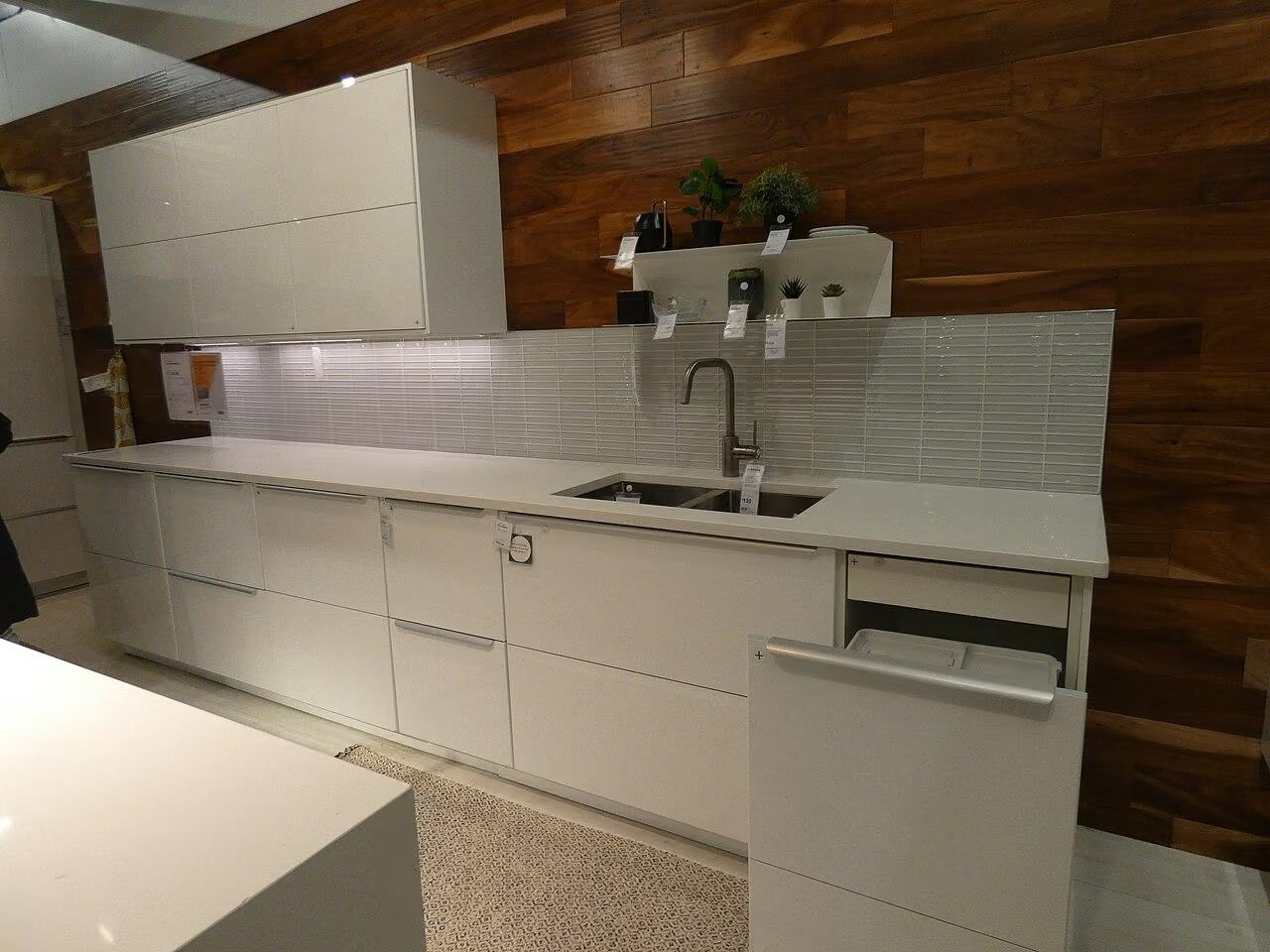
A smooth specified backsplash or worktop can sit comfortably beside fluted cabinetry. The change of texture is not a compromise if the junction is deliberate. Draw the edge, support, and cleaning access. Appropriate fabricators and installers should coordinate technical requirements rather than relying on a seamless-looking image.
Do not choose an absorbent or difficult-to-clean surface for the most exposed zone simply because it matches a dry panel. The same color family can be achieved through different products. A kitchen is a collection of tasks, and its materials can acknowledge those tasks while remaining visually connected. Calm variation often works better than forced uniformity.
To specify the smoother working backsplash beside it, examine A Kitchen Backsplash with Personality and Sensible Cleaning.
Resolve the ends and horizontal ledges
Draw the top cap, lower end, side edge, and busy corner in section. Specify how they finish and clean; the repeated vertical face is only one part of the panel.
If the panel sits on an island or passage edge, inspect corners where people pass. A decorative rib should not create a sharp or snagging contact point. A rounded termination may help, but it must be included in the real dimensions. The design should be pleasant to brush past during cooking, not merely attractive from the adjoining room.
Make replacement possible
A separately removable end panel can be useful if one area becomes damaged. Ask how it is fixed and whether removal affects neighboring cabinets or services. A textured surface is more reassuring when its maintenance does not require rebuilding a long cabinet run. Keep product and finish details for future renewal.
Standard components may provide an appropriate solution, while custom work can resolve a particular height or junction. Compare the complete installed scope, including preparation, finishing, fixings, and making good. A low price for a decorative board alone does not describe the finished project. Repair access and the availability of replacement material belong in the comparison.
Coordinate light with the texture's intensity
Under-cabinet or nearby light can exaggerate every rib and shadow. Test the sample at the intended source angle. The effect may be pleasing on a dry outer panel but distracting behind a preparation area. The kitchen's task lighting should remain useful rather than being arranged solely to dramatize the decorative surface.
Check the view from nearby dining seats as well as the standing cook. Reflective finishes and ribbed glass can catch bright points. A restrained warm light and quieter supporting materials may provide enough richness. If integrated lighting is used, preserve access to its components and coordinate installation with appropriate professionals.
Review the panel after an ordinary cooking trial
Where practical, place the sample near the proposed location during normal use without creating a hazard or violating product guidance. Observe exposure and cleaning rather than deliberately damaging it. The trial can reveal whether the assumed dry zone is actually dry and whether the household accepts the care routine.
In a fictional evening, the kitchen's outer panel catches a soft vertical rhythm while the working surfaces remain easy to wipe. The Deco note is clear without appearing in every location. Confirm the exposure map, exact profile, finish care, limited extent, practical junctions, safe contact, replacement, and light. A decorative kitchen detail is strongest when its placement makes sense after cooking has begun. Retain an offcut or sample with the finish record if the maker can supply one. It gives a future repairer a clearer reference than a style description and allows approved care products to be checked away from the installed face. Label the sample with the exact range and coating rather than only the color name.
Check, record, then decide.
A proposed worksheet for your own observations. Use consistent units for dimensions and keep the conditions with each record.
Kitchen exposure location
Where to check At the proposed ribbed panel during normal cooking, sink use, and circulation around the cabinet end.
- Record
- Map observed grease and splash directions, hand-contact areas, and whether the assumed dry outer face is actually sheltered.
- Read the result
- A location label such as island outer panel does not prove low exposure or suitability of an unspecified finish.
- If it does not work
- Move the texture to a less-demanding plane and use a suitable smoother surface where cooking or water dominates.
Finished groove and caps
Where to check On a sample containing the actual recesses, upper ledge, cut edge, and corner termination.
- Record
- Record profile depth in millimeters, approved wiping access, and edges where debris or water could remain after ordinary cleaning.
- Read the result
- The trial identifies care difficulties but cannot predict grease resistance, moisture behavior, or the life of a coating.
- If it does not work
- Simplify the profile, close an exposed edge appropriately, or choose another product before repeating the detail across the room.
Replacement and light effect
Where to check At the decorative end panel and its meeting with the floor, counter, and nearby service zone.
- Record
- Ask for the fixing and removal sequence; compare the sample under task light from the cook's position and adjacent dining seat.
- Read the result
- A dramatic shadow is not evidence of better function, and a removable-looking edge does not establish nondestructive access.
- If it does not work
- Use an independently replaceable panel or gentler lighting when the effect complicates repair or distracts from the working surface.
A practical trial
- Check the exact product rather than treating a wood appearance as construction information.
- Keep task-light performance separate from the desire to emphasize every rib.
- Retain a labeled finish sample for later approved-care and repair discussions.
Compare the same scope
- Actual exposure and product-specific cleaning limits
- Limited panel area with resolved horizontal ends
- Fixing, corner safety, light, and replacement scope
Cost drivers to discuss: Custom ribbed fabrication and finish; Moisture-sensitive edge preparation; Removing adjacent work to renew a fixed panel.
Choose another route when: Kitchen fluting is unsuitable where deep recesses receive routine grease or water that the specified product and household cleaning method cannot reasonably address.
The download is a blank record template. Your completed notes remain wherever you choose to keep them; this page has no measurement-submission service.
Sources for this guide
Each reference’s supported point and limits appear beside the relevant passage above. Product documentation applies to the named product, rather than every similar item or the photographed room.
Source text checked November 4, 2026. Specifications can change; confirm the current instructions for the exact item before ordering.
Your questions, considered.
Where should fluted kitchen panels go?
Choose the location after observing actual exposure. A less-exposed outer face may suit the idea better than a greasy or wet work zone, subject to the exact product.
Can I judge fluted cleaning from a photograph?
No. Request the actual depth, spacing, coating, and end details, then try the manufacturer's recommended care method on a representative sample.
Should the fluted panel match the backsplash material?
It does not have to. A deliberate change to a specified smoother working surface can preserve the palette while giving different locations appropriate care requirements.
About this guide: written with AI assistance for TIANLICHUJU. These are general design ideas, not a measured survey or a completed client project. Any domestic vignette is fictional. Confirm product specifications, site dimensions and local requirements before construction; use qualified professionals for regulated work. Read our editorial approach or suggest a correction.