The decision, with conditions
- Choose this route when
- Choose an apartment studio corner when a specific suitable activity can be set up, carried out and put away with the required surface, storage and environmental conditions.
- Use the alternative when
- If reserve supplies overwhelm the surface, separate them from the active project before buying more open shelving or moving the activity onto the dining table.
- Stop or change the plan when
- Do not locate a process in a shared room when its material, ventilation, heat or equipment requirements cannot be met. Attractive daylight and a protective mat are not a general safety approval.
Compare the practical options
| Workspace element | Choose around | Practical test |
|---|---|---|
| Work surface | The task's load, movement and substances | Use the actual tools on a suitable stable surface |
| Active storage | The current project's daily materials | Retrieve and return everything without clearing the room |
| Unfinished-work position | What must stay protected between sessions | Pause safely without occupying the household's only table |
| Cleanup arrangement | The process's actual residues and instructions | Complete cleanup without unsuitable domestic improvisation |
Define the making before designing the corner
Name the creative process before naming the corner a studio. Drawing, sewing and painting can require very different surfaces, equipment and environmental conditions. Use the actual materials and their instructions to decide whether the shared room is suitable, then provide a place for the active project rather than beginning with a display of reserve supplies.
This proposal suits a person whose activity can be carried out appropriately within a shared domestic room. Some processes involve dust, fumes, heat, sharp tools or other conditions that require more substantial controls. Those should be assessed through relevant product instructions and qualified guidance. A pleasant corner cannot make an unsuitable process safe. If the work needs isolation or specialist ventilation the apartment cannot provide, another workspace may be the honest answer.
Separate active work from reserve supplies
Lay out only the next project’s active materials and mark what must remain undisturbed between sessions. Give that work a protected destination before allocating storage to reserve supplies. Run the stopping sequence as carefully as setup: tools returned, appropriate cleaning completed and materials stored according to their guidance. If the project cannot be made safe without dismantling it, another working location or process may be needed. More decorative containers will not resolve a mismatch between the activity and the shared room.
Choose storage around actual dimensions. Paper, fabric, thread and tools may need different conditions and handling. Follow material guidance for safe storage, especially where children or pets share the home. A shallow drawer can protect a current drawing, while a separate container may suit sewing notions. Avoid assuming that a wall of identical jars is an effective system. Transparent display can be useful for some contents but exposes everything visually and may not protect sensitive materials from light or dust.
Reserve supplies and displayed objects both need storage that preserves access rather than hiding an unresolved pile. A Living Room for Collectors Who Want to See What They Own.
Give the worktop a credible structure
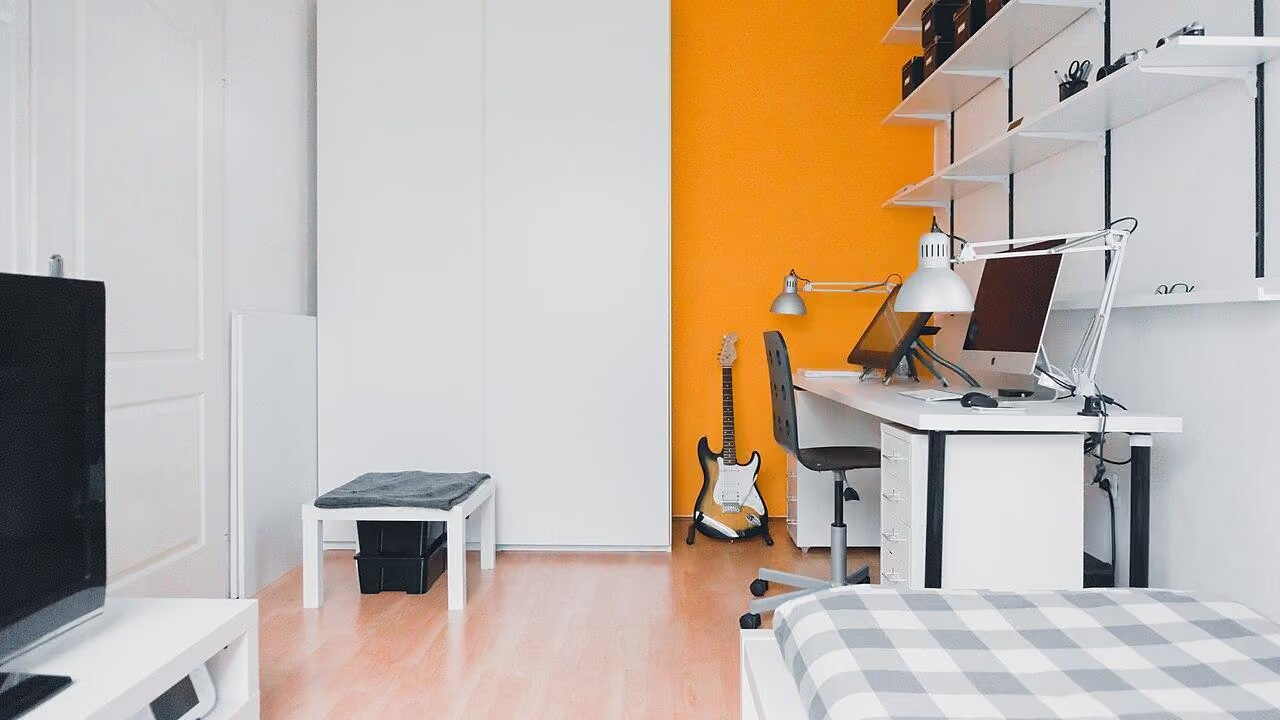
A creative surface must suit the forces and substances involved. A light writing desk may be adequate for sketching but not for equipment that vibrates or materials that demand vigorous cutting. Check load, stability and care information for the exact furniture. Use a suitable protective layer where needed, without allowing it to slide or create an awkward edge. Do not improvise heavy equipment onto a decorative table simply because the proportions look right.
Test the seated or standing position with the actual task. Include elbows, tool movement, foot controls and the route around the worker. General interior guidance is not an individual ergonomic specification. If discomfort occurs, investigate the setup rather than accepting it as the cost of a compact home. A folding surface can save space, but it needs appropriate support and a realistic place for the unfinished work when it closes. The closed footprint is only half the furniture’s story.
Plan setup and cleanup as part of the activity
Write down the steps required to start and stop. If every session requires moving a plant collection, clearing the dining table and retrieving tools from several rooms, the corner may discourage use. A contained active kit can shorten the sequence. Equally, an unfinished project needs a safe temporary home so clearing the surface does not mean dismantling hours of work. A shallow tray, folder or protected shelf may be more useful than another open display area.
Cleanup must suit the process and materials. Do not assume that a domestic sink or household vacuum is appropriate for every residue. Follow the relevant guidance and seek specialist advice when needed. Keep waste and cleaning products stored safely. The room should not rely on hiding a messy surface behind a curtain while dust, moisture or unsafe materials remain unresolved. A creative corner is successful when it is easy to maintain responsibly, not merely easy to conceal from the sofa.
When making shares the dining table, an achievable changeover protects the next meal. A Homework Corner That Can Become a Dining Space Again.
Use light for accuracy and comfort
Daylight can be valuable, but its direction and variation matter. The working hand may cast a shadow, or strong sun may create glare on paper and screens. Test the actual position during the hours the activity usually happens. A suitable adjustable task source can support evening work, with a safe power route and stable placement. Avoid exposed bright sources in the normal line of sight.
If color decisions are important to the activity, evaluate materials under appropriate conditions rather than relying on a decorative bulb selected only for atmosphere. A warm rose-beige room can still provide useful task light; the two functions need not be confused. Keep ambient light separate so the living room can remain comfortable for another person while the maker works. Significant noise or privacy needs are separate constraints and may limit whether the activity can coexist with shared relaxation.
Keep the visual language simple enough to evolve
Natural wood, charcoal details and a muted pink wall can connect a creative corner to the rest of the home. Let the current work provide much of the personality. Decorative storage bought before the process is understood can become a collection of attractive containers with no clear use. Start with a few useful pieces and expand only where a recurring need appears.
Portable furniture is easier to move and adapt, while fitted work can use an awkward recess precisely. Compare the complete cost, including suitable surfaces, lighting, storage and any technical requirements. A low purchase price is not good value if the table is unstable or the finish cannot tolerate the activity. Repairability matters too: a replaceable worktop layer may be more useful than a delicate permanent finish. The corner should be able to change when the maker’s tools or interests change.
Trial a complete session before committing
Run a small appropriate version of the activity in the proposed position. Set up, work, clean and put away. Record where materials have no home and where movement becomes awkward. Use that evidence to refine the plan. This approach is unsuitable when the activity’s safety or environmental needs cannot be met in the shared room.
In an imagined quiet hour, a small piece remains protected on its tray, ready for the next session, while the main living surface is clear again. The corner has not consumed the apartment. It has given creativity a dependable place within it, balancing the pleasure of making with the ordinary responsibilities of sharing and maintaining a home.
Check, record, then decide.
A proposed worksheet for your own observations. Use consistent units for dimensions and keep the conditions with each record.
Actual making process
Where to check At the proposed corner with the tools and materials used for one current project.
- Record
- Name the process, equipment and substances, then list heat, dust, fumes, sharp-tool or other requirements from relevant instructions; distinguish them from decorative preferences.
- Read the result
- Drawing, sewing and solvent-based processes cannot share an assumed universal domestic workspace specification.
- If it does not work
- Use another appropriate workspace if the required controls cannot be provided in the shared room.
Worktop and active reach
Where to check At the working edge with the maker seated or standing as usual.
- Record
- Measure surface dimensions with units, identify support and load information and note tool movement, hand shadows or discomfort during a representative task.
- Read the result
- A light writing desk may not support the movement or equipment the actual process needs.
- If it does not work
- Trial a suitable stable surface or change the station before buying more organizers.
Pause and cleanup destinations
Where to check Between the active surface, reserve supplies, unfinished work and appropriate waste handling.
- Record
- List all setup and cleanup steps and where each item goes; note projects left on shared furniture and residues without an appropriate treatment route.
- Read the result
- A corner is manageable when work can pause responsibly without transferring clutter or unsuitable cleanup to the household.
- If it does not work
- Provide appropriate protected project storage or reduce the activity's scope until its full process can work.
A practical trial
- Run one safe complete session, from material retrieval to cleanup, without hiding unfinished parts behind a curtain.
- Keep current supplies separate from reserves and identify which proposed containers have no actual task.
- Test evening task light and shared-room movement while another person uses the surrounding living area.
Compare the same scope
- A suitable portable worktop with active-project storage
- A fitted recess only after a proven process trial
- An external appropriate workspace for activities exceeding domestic conditions
Cost drivers to discuss: Task-specific surface support and protection; Material storage, waste handling and any necessary controls; Useful lighting and storage for work left between sessions.
Choose another route when: Do not fit the activity into a decorative corner when its safety, ventilation or isolation requirements cannot be appropriately met.
The download is a blank record template. Your completed notes remain wherever you choose to keep them; this page has no measurement-submission service.
Sources for this guide
Each reference’s supported point and limits appear beside the relevant passage above. Product documentation applies to the named product, rather than every similar item or the photographed room.
Source text checked November 4, 2026. Specifications can change; confirm the current instructions for the exact item before ordering.
Your questions, considered.
Can any hobby fit into a living-room corner?
No. Processes involving fumes, dust, heat or other demands may need controls a domestic shared room cannot provide. Define the materials and process, follow relevant guidance and seek qualified advice where needed.
How should I store an unfinished project?
Provide a suitable protected tray, folder or shelf based on its actual form. The project should pause without being damaged or permanently occupying the room's essential shared surface.
Should I buy a complete wall of craft storage first?
Start with active supplies and test a complete session. Reserve materials can live elsewhere where appropriate. Add storage only when a recurring need is clear, rather than buying attractive containers before understanding the process.
About this guide: written with AI assistance for TIANLICHUJU. These are general design ideas, not a measured survey or a completed client project. Any domestic vignette is fictional. Confirm product specifications, site dimensions and local requirements before construction; use qualified professionals for regulated work. Read our editorial approach or suggest a correction.