The decision, with conditions
- Choose this route when
- Choose the breakfast corner when both people can enter, sit, use the table and leave during the real morning routine while the kitchen's necessary doors and working routes remain available.
- Use the alternative when
- Use the main dining surface or a less fixed seating arrangement when a dedicated nook consumes access needed for preparation, storage or people with different departure times.
- Stop or change the plan when
- Do not approve a table solely because it fits the empty corner; stop if the occupied chairs, serving sequence or access to essential kitchen functions cannot work together.
Compare the practical options
| Morning need | Option to compare | Check |
|---|---|---|
| Both people get up independently | Separate chairs or accessible bench positions | Pullout space and the person who serves |
| A wall suggests a banquette | Test complete entry and sitting | A fitted look can restrict leaving from the middle |
| Table must stay compact | Lay out two actual breakfasts and shared items | A compact label does not establish usable surface |
| Kitchen storage seems convenient below the seat | Use appropriately occasional contents | Access while seated and the lid or drawer operating area |
Design for the short meal that actually happens
Begin with the morning's order: who makes breakfast, who sits first and who leaves while the other person remains. Set out the actual mugs, plates and food on a temporary surface at the candidate location. This exposes the difference between a pleasant empty corner and a useful everyday place. Choose the table and seating only after the serving and departure sequence has a workable route.
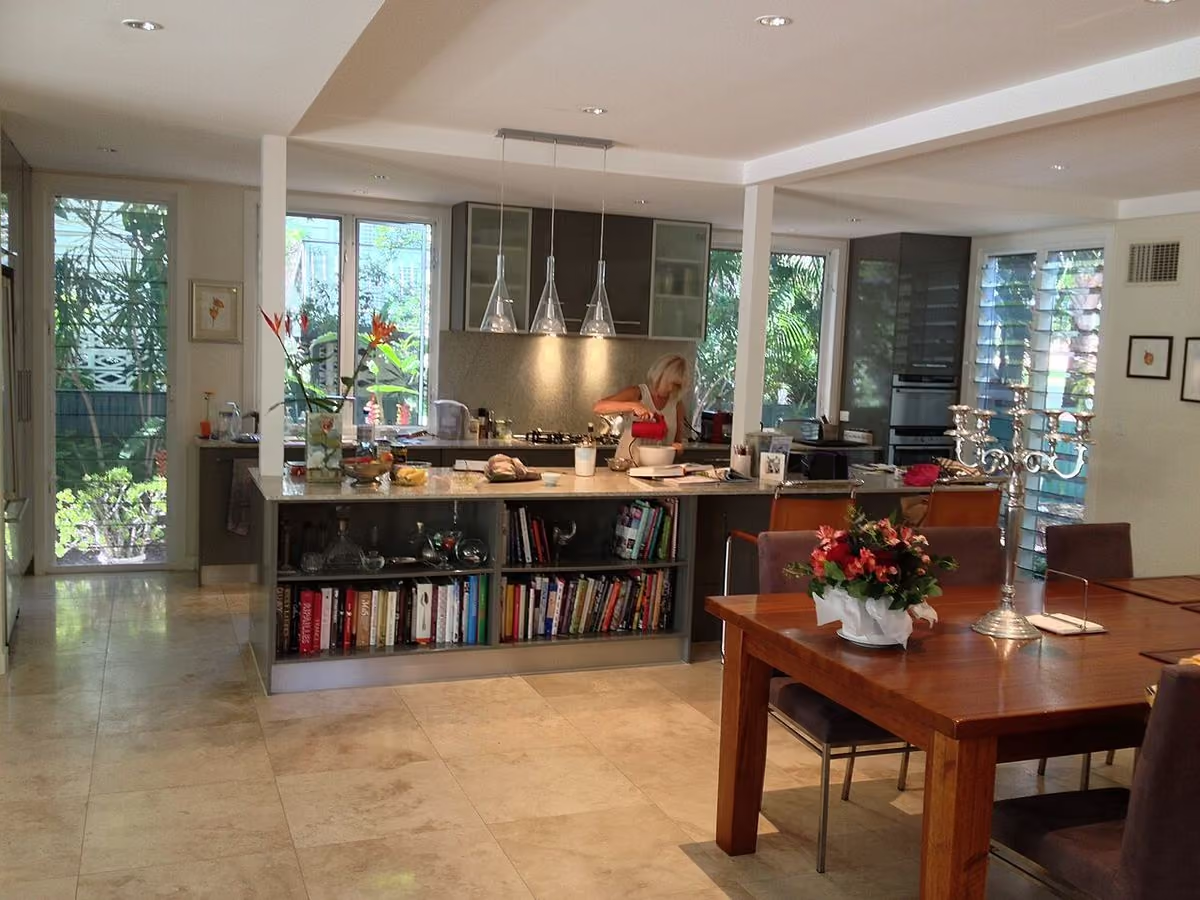
This is especially relevant in an open plan room where the breakfast area is inserted between cooking, living, and circulation. A small table can establish a welcoming place, but even compact furniture can obstruct an important route once occupied. Compare the corner with using the existing dining table or a different part of the kitchen. A dedicated breakfast place is worthwhile when it offers a genuine advantage, such as convenient light, a useful view, or a calmer place to sit without interrupting preparation.
Trace two people through an ordinary morning
Describe who makes the drinks, who retrieves food, and who leaves the seat first. Place the seats so those actions can happen without repeated negotiation. If one person always needs to cross in front of the other to reach the refrigerator, the corner may be in the wrong place. Use the kitchen with a temporary table outline and existing chairs before buying fitted seating. The occupied test will reveal conflicts that an empty plan often hides.
Include doors and appliances in their working positions. An open dishwasher or a pulled out bin can consume the space that seemed available for a chair. The table's base and chair legs also matter, particularly in a narrow corner. Do not judge the arrangement by the tabletop alone. A pedestal may free the corners but obstruct feet, while a four leg base may prevent a chair from sliding into the expected position. The complete furniture relationship needs to support both sitting and movement.
To align the breakfast route with everyday kitchen storage, see A light coastal kitchen with mostly closed storage.
Choose the seating from access and duration
Test the seat that is hardest to enter while the other person stays seated. Include cushions, table supports and the objects normally carried to breakfast. Then open the adjacent storage needed during the meal. If one person must repeatedly stand to release the other, decide whether that compromise suits the actual routine before committing to a fixed bench or a particular table base.
Assess comfort for the realistic duration. A short perch can be acceptable for some users and unsuitable for others. Seat depth, support, and the relationship to the table should be tested together. If cushions are planned, include them because they change effective height and may move during use. Provide an appropriate alternative where a bench or stool does not suit a regular occupant. The small daily ritual should feel welcoming to both people rather than being designed around one person's preferred posture.
Before committing to bench seating, compare A farmhouse dining bench with an alternative seat.
Keep the table small but genuinely usable
Lay out two actual breakfasts with cups, plates, and any shared items. Add the newspaper, notebook, or device if it is normally part of the routine. This gives a more useful minimum surface than selecting a table solely because it is labeled compact. A very small top can make every action feel crowded, while an oversized one may consume the circulation the corner was meant to preserve. Find the size that supports the activity with modest spare room.
Choose a surface and edge that suit food, drinks, and cleaning. Read the product's care information and consider the marks you are willing to accept. A delicate finish can be frustrating in a place used quickly every morning. A broad rough edge may be uncomfortable for forearms or catch crumbs. The material can still have character, but its texture should not make the simplest meal require unusual care. The corner's appeal comes partly from being ready to use without preparation.
Give morning light a practical control
A bright window can make the corner attractive, but direct sun may create glare or make one seat uncomfortable at certain times. Observe the actual morning conditions and test any window treatment with the seats occupied. A sheer can soften some light while leaving privacy or stronger sun control unresolved. Keep window operation and curtain stacking in the plan. The corner should not depend on a chair permanently blocking the only way to reach the opening.
Provide useful ordinary lighting for darker mornings and other uses of the corner. A decorative pendant may define the area, but check its height, glare, and relationship to the route. In a modest open plan room, a large fitting can divide the view more strongly than expected. A simpler wall or ceiling arrangement may be sufficient. Use appropriate installation advice for electrical changes and judge the light from the seats rather than only from a standing view of the table.
Store only what belongs to the ritual
A nearby shelf or drawer can hold breakfast items, but the corner should not become a secondary kitchen storage pile. Identify what needs to remain close and what already has a convenient home in the main kitchen. Duplicating every item can add clutter without saving meaningful movement. A small tray or a limited cupboard section may be enough. The storage should support a quick beginning and ending, not encourage the table to remain permanently laid with objects that are rarely used.
If the bench includes storage, consider when it can be accessed. A lift seat is inconvenient while someone is sitting, and a drawer needs space in front. Occasional linens may suit that location better than the items required at every breakfast. Keep the mechanism and load appropriate to the product and construction. Extra volume is useful only when it can be reached without dismantling the routine the corner was designed to support.
Let the corner have a simple second life
Outside breakfast, the area may support a brief conversation, a small task, or an extra dining place. Give it that flexibility without making it responsible for every activity in the home. If it becomes a work station, provide a realistic way to clear work equipment before meals. The table should not be permanently unavailable to the morning routine because another use has no storage destination. One clear primary job and a modest secondary role are often enough.
Review the arrangement after several mornings. Notice whether both people use it, whether the kitchen route stays clear, and whether cleanup is easy. Adjust the furniture or inventory based on those observations. The finished corner can be simple: two comfortable places, a durable surface, useful light, and a convenient path to food and drinks. Its character comes from supporting a repeated moment well, making the open plan kitchen feel more personal without requiring more space or decoration than the ritual actually needs.
Check, record, then decide.
A proposed worksheet for your own observations. Use consistent units for dimensions and keep the conditions with each record.
Two-person morning route
Where to check Between refrigerator, food preparation, drinks and both proposed breakfast places with appliance doors represented open.
- Record
- List who retrieves or serves each item and where one person blocks the other.
- Read the result
- A compact nook may be inefficient when its occupied route crosses active kitchen work.
- If it does not work
- Change the location or use another existing eating surface.
Bench versus separate chairs
Where to check At the actual table and base with both users entering, sitting and leaving.
- Record
- Note independent exit, support and the pullout or end-entry area in centimeters.
- Read the result
- A banquette's fitted appearance does not establish convenient access for the person who repeatedly gets up.
- If it does not work
- Use separate suitable chairs or relocate the frequent mover's seat.
Real breakfast surface and nearby storage
Where to check On the proposed top with two usual breakfasts, cups and shared items fully arranged.
- Record
- Measure used surface in centimeters and record any item retrieved from storage while another person is seated.
- Read the result
- Nominal compact dimensions or storage beneath a seat may not fit the actual ritual.
- If it does not work
- Adjust the top or keep active breakfast items in more accessible kitchen storage.
A practical trial
- Use a marked layout and suitable existing chairs for several ordinary mornings before ordering fitted seating.
- Observe morning glare, privacy and treatment operation from both seats, not just from the kitchen entrance.
- Clear the corner and use its intended secondary role to ensure work belongings have a return destination before breakfast.
Compare the same scope
- Actual two-person preparation sequence
- Occupied seating and appliance access
- Real place-setting area
- Useful storage and morning light control
Cost drivers to discuss: Fitted bench or separate seating; Table construction and finish; Task lighting and window treatment.
Choose another route when: A dedicated nook is unsuitable when it duplicates existing eating space while removing a necessary working or circulation route.
The download is a blank record template. Your completed notes remain wherever you choose to keep them; this page has no measurement-submission service.
Sources for this guide
Each reference’s supported point and limits appear beside the relevant passage above. Product documentation applies to the named product, rather than every similar item or the photographed room.
- U.S. Access Board: Clear floor space, approach and turning · Read the supported point and its limits
Source text checked November 4, 2026. Specifications can change; confirm the current instructions for the exact item before ordering.
Your questions, considered.
Is a banquette better than chairs in a small breakfast nook?
It depends on access and routine. A bench can use a wall but restrict independent movement; chairs need pullout room. Test both while appliances are open.
How do I choose a breakfast table size for two?
Set out the breakfasts, cups and shared items you actually use. Include the base and occupied seating rather than selecting by a compact product label.
Should breakfast items live inside a storage bench?
Only if access suits the routine. A seat lid is inconvenient while occupied, so occasional linens may fit better there than items needed at every breakfast.
About this guide: written with AI assistance for TIANLICHUJU. These are general design ideas, not a measured survey or a completed client project. Any domestic vignette is fictional. Confirm product specifications, site dimensions and local requirements before construction; use qualified professionals for regulated work. Read our editorial approach or suggest a correction.