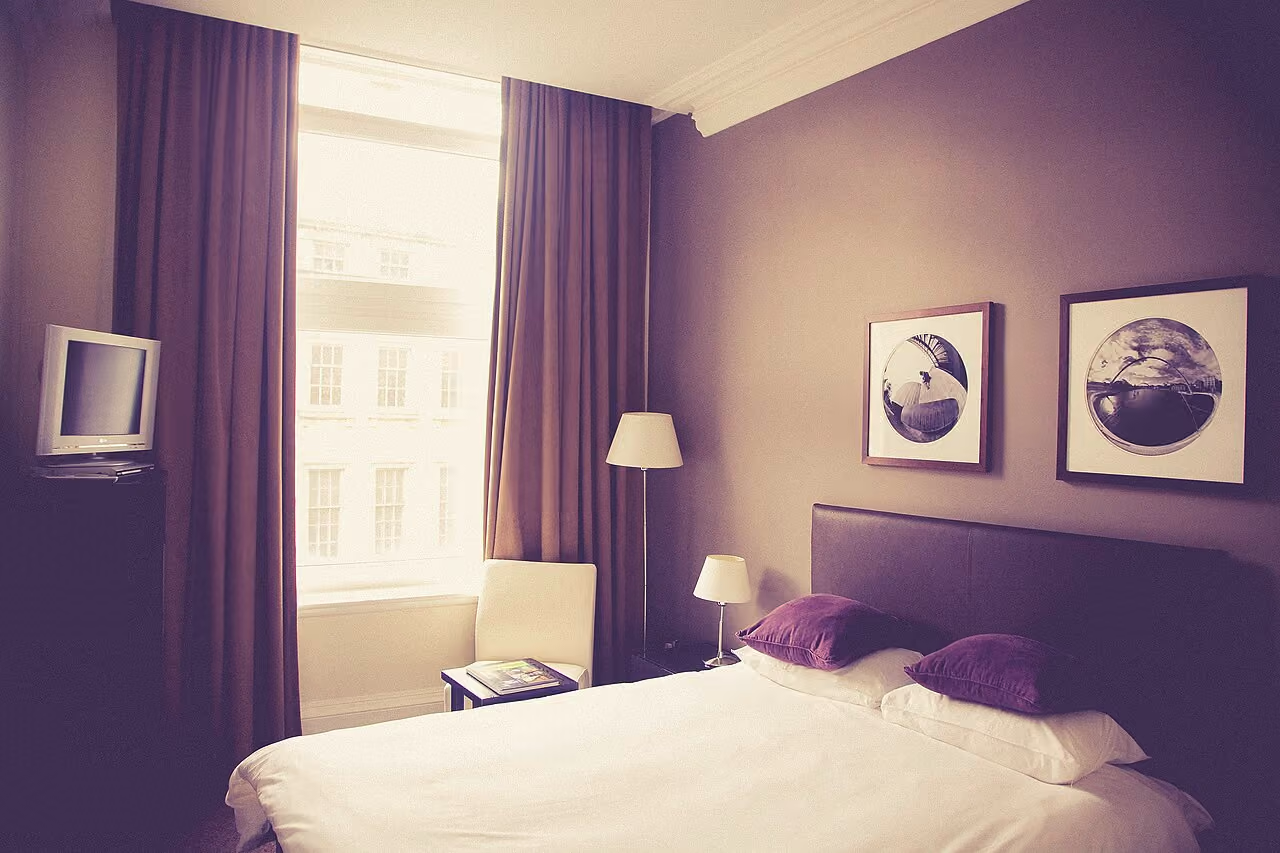
The decision, with conditions
- Choose this route when
- Choose a quieter surrounding field when the resident finds one meaningful object enjoyable and competing patterns or reflections distracting during the room’s actual routines.
- Use the alternative when
- If familiar objects provide reassurance, retain them and trial a smaller change such as a lamp position or bedding texture instead of stripping the room to a minimal ideal.
- Stop or change the plan when
- Stop a trial that increases discomfort or removes useful familiarity. A design preference is not a diagnosis, and a muted color name is not evidence of a therapeutic effect.
Compare the practical options
| Choice to test | Resident-led question | Small first trial |
|---|---|---|
| Bedding texture | Does the exact washed fabric feel comfortable? | Handle and, where feasible, launder an approved sample |
| Bedside light | Is glare or the control method uncomfortable? | Try one shaded adjustable source with a familiar switch |
| Visible versus closed storage | Does seeing belongings help or distract? | Combine a small daily tray with reserve storage |
| Patterns and display | Which familiar objects remain reassuring? | Simplify one area without removing every personal reference |
Begin with the resident’s responses, not a universal calming palette
Ask which specific input the resident wants to change and which familiar features they want to keep. A color called calming does not answer either question. Start with a reversible single-variable trial, leaving meaningful objects available, so the resident can compare the effect without being asked to accept a complete unfamiliar bedroom.
Ask about current preferences in concrete terms. Which blanket feels good? Which lamp is avoided? Is a patterned duvet distracting, or does a familiar pattern feel reassuring? Does the resident prefer to see belongings or have them behind doors? The answers may not align with a minimalist mood board. This approach is especially suitable for someone who values predictable visual and tactile conditions. It should not be presented as a diagnosis, a therapeutic intervention or a substitute for support from relevant professionals when that support is needed.
Reduce competition without removing personality
Choose one retained element the resident positively wants to see, then compare the room with a single competing pattern covered by a plain temporary layer. Ask about the difference during a normal activity, not only during a presentation of the new scheme. Keep the trial reversible and record no improvement as a useful result. If the original arrangement feels more familiar and comfortable, restore it. The aim is an individually workable level of visual demand, not a photographically empty bedroom.
Avoid converting quietness into emptiness. Meaningful objects can help a room feel owned and recognizable. The decision is about where they appear and how much visual space they need. A single clear display shelf may be more comfortable than objects spread across every surface, though some residents may prefer several familiar items close at hand. Keep the bedside area especially intentional. It is seen at moments when the person may be tired and less willing to negotiate a crowded collection of bottles, chargers and decorative pieces.
Test touch before buying large quantities
Fabric names do not reliably describe the experience of touch. Two cottons can feel very different because of weave, finish and weight. A nubby cushion that looks soft may feel abrasive to the intended user. Request samples and let the resident handle them in the way the finished object will be used. Bedding deserves particular care because it contacts the skin for long periods. Wash a sample where feasible and permitted, since laundering can change its feel.
Furniture edges, handles and floor surfaces matter too. The resident should be able to approach and operate storage without an unpleasant grip or unexpected projection. Keep maintenance realistic. A fabric loved on the first day may become frustrating if its care is difficult or its texture changes quickly. The goal is not to find the most expensive natural material. It is to identify suitable products with understandable care requirements and a sensory character the resident actually accepts. Do not order a full room of textiles from a small photograph.
A rich-looking upholstery sample still needs an individual touch and care assessment. Velvet in a Busy Home: Looking Beyond the Photograph.
Make light adjustable and controls predictable
Test light from the positions where it is used. An exposed bulb may be uncomfortable even when its overall brightness seems modest. A shaded source can be more acceptable, but its shape and placement should still be tried. If the resident reports sensitivity to flicker, glare or certain lighting conditions, take that report seriously and seek appropriate product guidance rather than assuming a decorative dimmer solves the issue.
Controls should be obvious and consistent. A familiar bedside switch may be more comfortable than a system that depends on a phone, voice command or changing app interface. Provide enough light for safe movement and the tasks the person chooses, with a separate gentler setting if desired. Avoid a room where the only alternatives are a bright ceiling source and near darkness. Where electrical changes are needed, qualified work is essential. The resident’s preferences should inform the brief given to the electrician or lighting supplier before installation.
Predictable bedside controls are easier to use when charging cables also have a clear route. Living with Exposed Cables in a Room You Cannot Rewire.
Organize for predictability rather than display discipline
Storage is successful when the person can find and return belongings without repeated decisions. Consistent places for daily items can make the room easier to use. However, closed doors are not universally helpful; for some people, hidden objects are harder to remember or locate. Discuss which items should remain visible and which create unwanted visual competition. A small open daily tray and a closed reserve drawer may be a useful compromise.
Keep furniture positions predictable unless there is a clear reason to change them. The route from the door to the bed should remain legible and free of loose objects. Rugs, baskets and floor cushions should not be added merely because they appear soft in photographs. They need a real function and safe placement. Sound deserves individual consideration as well. Some residents prefer a quieter acoustic environment; others value familiar background sound. Textiles can soften reflections, but significant sound isolation is a separate technical question and should not be promised by a styling scheme.
Use small trials to avoid expensive mistakes
Change one part of the room at a time when possible. Try a different lamp before repainting, or simplify the bedside surface before replacing all the storage. Ask the resident what improved and what became less comfortable. A reversible trial makes it easier to identify the cause of a response. Simultaneously changing color, fabric, lighting and layout can make a disappointing result difficult to diagnose. Keep the preferred existing blanket or lamp available during the trial rather than removing every familiar reference at once. Continuity can make the comparison more useful and less disruptive.
The financial priority should follow the most persistent friction. A modest lamp or a preferred duvet cover may provide more value than a new matching suite. The scheme is unsuitable when decisions are imposed on the resident or when a material is known to be uncomfortable but retained for appearance. Review the room after ordinary use, including cleaning and laundry. A clearly imagined evening captures the intention: the person enters, recognizes familiar places and adjusts one reachable light. Nothing about that scene requires the room to look anonymous. Its quietness comes from agreement between the environment and the person living in it.
Check, record, then decide.
A proposed worksheet for your own observations. Use consistent units for dimensions and keep the conditions with each record.
Resident's tactile preferences
Where to check At bedding, upholstery and handles the resident uses directly.
- Record
- Name the exact sample, describe touch in the resident's own words and note any changed response after approved washing or extended contact.
- Read the result
- A fabric advertised as soft or natural is not automatically comfortable for this individual.
- If it does not work
- Retain a familiar acceptable textile and trial another sample before ordering a complete set.
Light and control response
Where to check At the bedside and usual entrance with proposed lighting operated normally.
- Record
- Record visible sources, reflections, reported discomfort and the control method; compare one changed light while other room conditions remain familiar.
- Read the result
- An adjustable source is useful only when its glare, operation and predictability suit the user.
- If it does not work
- Choose a different source or familiar physical control instead of imposing a decorative technology system.
Visibility and finding things
Where to check At the daily tray, drawer and route between door and bed.
- Record
- List items sought, where they are found and any extra searching after a visible-versus-closed storage trial; retain the resident's feedback rather than a stylist's score.
- Read the result
- Less visible storage may reduce competition for one person but make belongings harder to find for another.
- If it does not work
- Use a selective open daily area alongside closed reserves, with consistent locations.
A practical trial
- Change one fabric, light or small storage arrangement at a time and compare the resident's response over normal use.
- Leave a preferred familiar object available during trials rather than removing every personal reference simultaneously.
- Check that rugs, baskets and floor cushions serve a useful purpose without complicating the person's predictable route.
Compare the same scope
- A single preferred textile change
- A tested shaded source with understandable control
- Selective visible daily storage versus broader closed storage
Cost drivers to discuss: Samples and care-compatible replacement textiles; Suitable lighting rather than decorative effects alone; Storage changes justified by observed finding and return behavior.
Choose another route when: Reject an imposed finish, texture or arrangement the resident reports as uncomfortable, regardless of its advertised calming character.
The download is a blank record template. Your completed notes remain wherever you choose to keep them; this page has no measurement-submission service.
Sources for this guide
Each reference’s supported point and limits appear beside the relevant passage above. Product documentation applies to the named product, rather than every similar item or the photographed room.
Source text checked November 4, 2026. Specifications can change; confirm the current instructions for the exact item before ordering.
Your questions, considered.
Is a beige or pink bedroom always sensory calming?
No. Comfort depends on the individual resident's response to undertones, contrast, texture and light. Choose with that person rather than applying a universal calming-palette claim.
Should everything be hidden behind cupboard doors?
Not necessarily. Some residents find visible belongings easier to locate, while others prefer less visual competition. Discuss each daily item and trial a small mix of visible and closed storage.
Why change only one part of the bedroom at a time?
A limited reversible trial makes it easier to identify what improved or became uncomfortable. Changing light, textiles, layout and color together can make an unsatisfactory result difficult to diagnose.
About this guide: written with AI assistance for TIANLICHUJU. These are general design ideas, not a measured survey or a completed client project. Any domestic vignette is fictional. Confirm product specifications, site dimensions and local requirements before construction; use qualified professionals for regulated work. Read our editorial approach or suggest a correction.