The decision, with conditions
- Choose this route when
- Use accessible suitable guides when the existing power arrangement is appropriate and the route avoids movement, pinching, heat and product-specific operating conflicts.
- Use the alternative when
- Reposition equipment closer to suitable provision, or obtain qualified outlet improvements when the actual need cannot be met by rearrangement alone.
- Stop or change the plan when
- Stop the cosmetic plan if it would hide damaged equipment, an overloaded connection or a permanently improvised electrical setup beneath furniture, fabric or finishes.
Compare the practical options
| Cable situation | Useful plan | What concealment must not do |
|---|---|---|
| Fixed media or desk equipment | Accessible service route behind suitable furniture | Trap connectors or prevent ventilation |
| Daily phone and laptop charging | Reachable appropriate device surface | Force cords across the room each evening |
| Moving screens or folding furniture | Test the full range of movement | Pinch or strain cables when furniture opens |
| Rental clips or channels | Check permission, substrate and product use | Assume removable adhesive cannot damage a finish |
Map the power need before hiding the cable
List each device, the outlet it uses and whether the connection is permanent equipment or temporary charging. Then follow the complete cable route with furniture operating normally. Improve only an arrangement already suitable for the equipment. If the power need itself is unresolved, changing the room layout or obtaining appropriate provision comes before clips, channels or a decorative cable box.
This approach is particularly relevant to renters or owners postponing electrical work. It does not mean every power problem can be solved cosmetically. Damaged equipment, insufficient outlets or unsuitable connections need appropriate professional attention. General cable tidying is not an electrical safety assessment. If the existing arrangement is inadequate, consult a qualified electrician and the relevant equipment guidance rather than concealing it more effectively. The goal is accessible, maintainable organization, not an invisible tangle.
Separate permanent equipment from temporary charging
List the devices that remain in place, such as a television or lamp, and those that arrive and leave, such as a laptop or phone. They benefit from different organization. Permanent equipment may use a planned route behind a cabinet, while daily charging needs an obvious reachable landing place. If every temporary device is connected behind heavy furniture, the resident will eventually create a second improvised route across the room.
Choose furniture positions partly in relation to suitable power. Moving a lamp slightly may remove an unnecessary floor crossing. A desk nearer an appropriate outlet can be more useful than one placed for perfect symmetry. Do not allow the desire to use an existing socket to force an uncomfortable working position, however. The layout and power plan should be evaluated together. If neither can work adequately within the existing conditions, that is evidence for a more substantial change rather than another layer of cosmetic concealment.
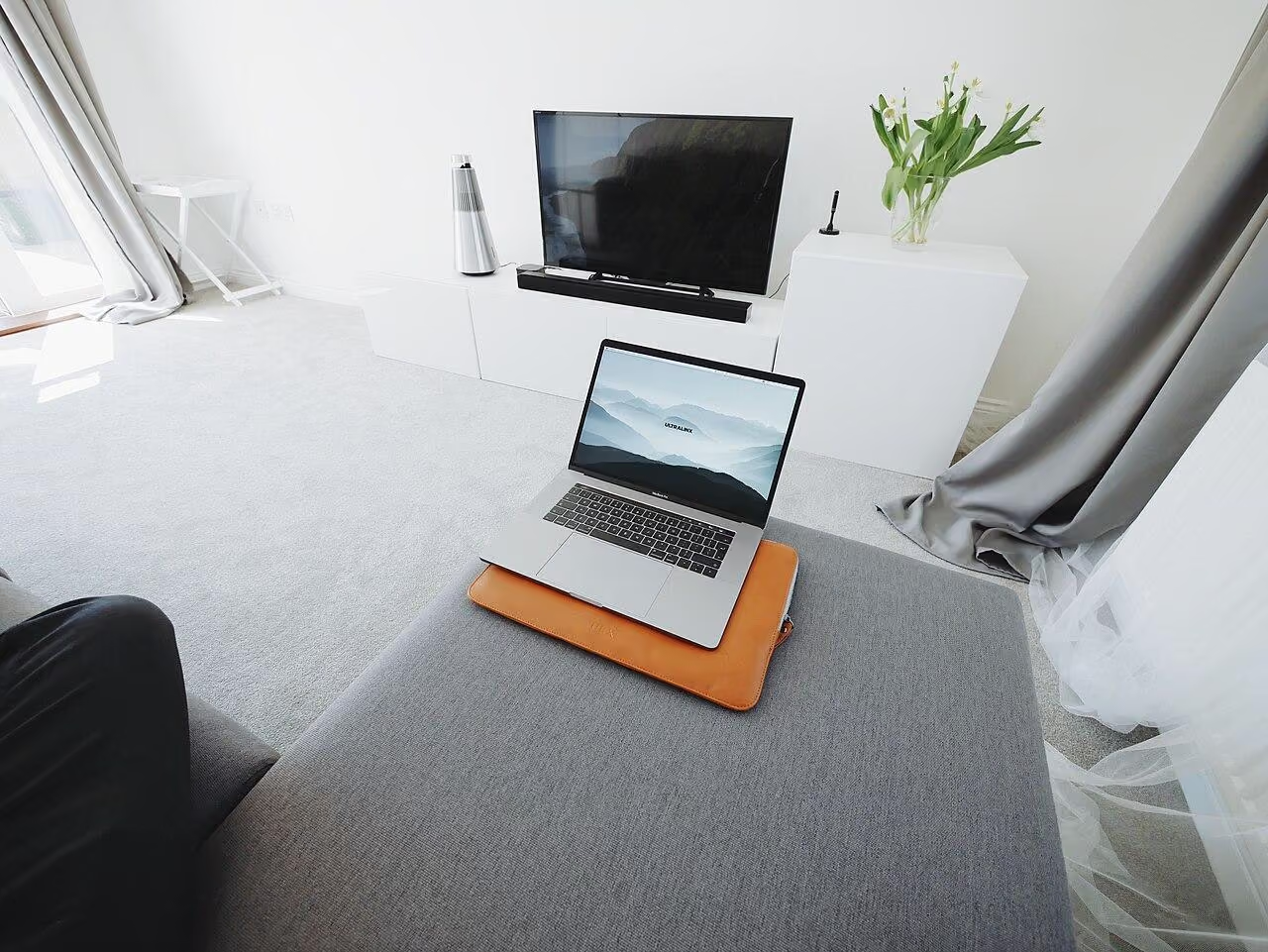
Two workstations make the distinction between permanent power and daily charging especially useful. A Home with Two Workstations and One Living Room.
Keep the route clear of movement and damage
Follow the route through every moving part: roll the chair back, open drawers and doors, and disconnect the equipment normally. Record where the proposed management accessory would introduce tension, pinching or inaccessible inspection. Correct the route rather than enclosing the conflict. If a suitable route still cannot be established, change equipment position or obtain appropriate provision before proceeding with the cosmetic plan.
Avoid hiding cords under rugs or creating other arrangements that conflict with equipment and electrical guidance. Do not assume a decorative channel is suitable for every cable or location. The product should be intended for the use and installed appropriately. Keep connections accessible for inspection and replacement. A cable route should make future changes easier, not lock a collection of devices permanently into one cabinet. The ordinary ability to unplug, clean and identify a connection is part of a good interior detail.
Let the furniture provide a service path
A cabinet can reduce visual noise if it has a suitable route for cables and access behind the equipment. Measure connectors as well as cords: a small opening may accept one wire but not the plug that must pass through it. Removable access panels can be more practical than a perfectly sealed back. Consider the next device too, without assuming that every future connector will be identical.
Equipment needs the ventilation and operating conditions specified by its instructions. Do not close warm devices or power supplies into an unsuitable compartment simply because the front looks calm. Keep the interior arrangement understandable, with enough separation to trace each connection. Simple labels may help where several similar cables meet. They should support maintenance rather than become another elaborate system. If the furniture cannot provide suitable access and conditions, a more open arrangement may be the better design despite leaving some equipment visible.
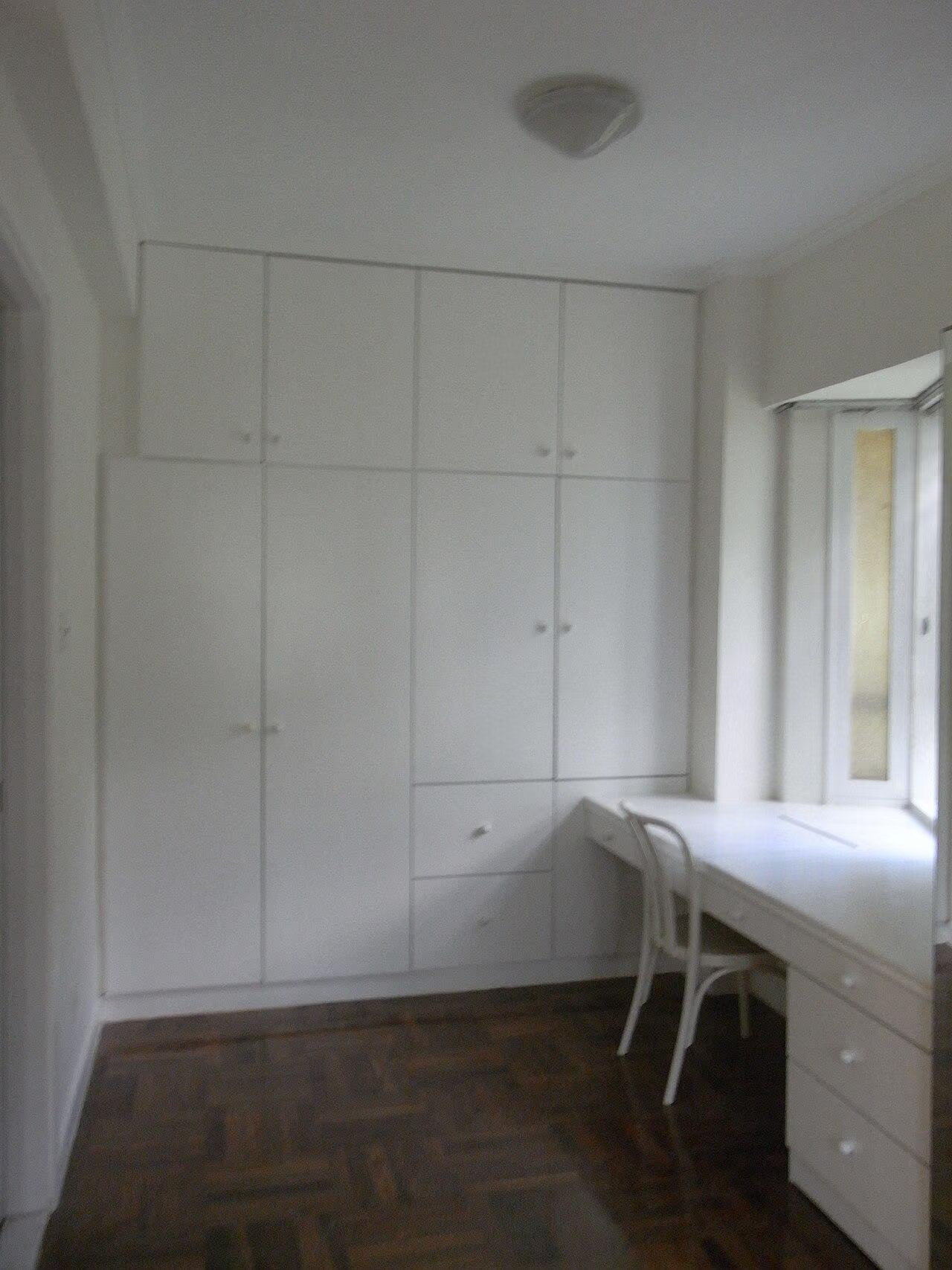
Furniture that conceals work should preserve that service path when its panels move. The Disappearing Desk in a Living Room.
Choose surface attachment carefully in a rental
Removable cable clips and channels may be useful, but compatibility depends on the wall or furniture finish. Follow the product’s instructions and test only where permitted. Adhesive removal can damage paint or veneer despite reassuring marketing. Ask for permission where required, and avoid attaching organizers to equipment in a way that blocks vents or affects operation.
Warm white channels against a warm white wall can look quieter than a contrasting tangle, while dark timber furniture may provide a natural background for some cables. The palette is secondary to the route’s suitability. Do not buy a large decorative box before understanding what it will contain and whether the equipment can be used there appropriately. A closed container is not a universal solution for powered connections. The neatest-looking answer may be a smaller number of devices, a better furniture position or proper electrical work.
Make everyday use easy enough to maintain
Provide a defined charging surface where devices can rest according to their guidance. The resident should not need to pull a cable from behind the sofa every night. Keep spare and obsolete cables separate from the active system so they do not accumulate around the current equipment. Review the arrangement when a device changes, and remove unused connections rather than leaving them as unidentified infrastructure.
Cleaning should remain straightforward. A route behind furniture needs enough access to remove dust and inspect condition without dismantling the room. Keep instructions and relevant product information available. Spending on suitable organizers may be modest, but insufficient power access can justify a larger professional project. Compare those scopes honestly. Repeatedly buying cosmetic accessories may cost more over time while leaving the practical problem unresolved.
Test every moving part before calling it finished
Open drawers, turn screens, pull out chairs and operate any folding work surface. Check that no cable tightens, catches or enters the walking route. Repeat the check after a normal week, when devices have been moved and daily charging has tested the intended arrangement. A system should remain workable beyond its first tidy afternoon. This plan is unsuitable if it relies on an overloaded, damaged or otherwise inappropriate electrical arrangement; tidiness does not make that arrangement acceptable. Seek qualified help for the underlying issue.
In an imagined evening, a lamp switches on without someone reaching behind a cabinet, and a phone has a clear place to charge. The room looks calmer because its service needs were considered directly. The cables have not been treated as an embarrassing afterthought, but as ordinary working details that deserve the same clarity as a drawer or a doorway.
Check, record, then decide.
A proposed worksheet for your own observations. Use consistent units for dimensions and keep the conditions with each record.
Power-needs map
Where to check At existing suitable outlets and the furniture serving lamps, media and portable devices.
- Record
- List devices, connection types and ordinary use; separate permanent equipment from daily charging and identify insufficient access or damaged components without hiding them.
- Read the result
- Repeated extension use or an unsuitable connection arrangement is not resolved by a decorative organizer.
- If it does not work
- Seek appropriate electrical assessment or change suitable furniture placement before concealing the route.
Cable movement envelope
Where to check At drawers, folding panels, chair wheels, doors and adjustable screens.
- Record
- Operate each moving element and note strain, pinch points and walking crossings; record connector dimensions with units where an access opening is proposed.
- Read the result
- A tidy closed arrangement can still damage or trap cables during the room's normal operation.
- If it does not work
- Revise the route or furniture access rather than securing the cable into a persistent conflict.
Service and charging destination
Where to check Behind equipment and at the place portable devices rest while charging.
- Record
- Identify equipment instructions, ventilation, unplugging access and cleaning reach; note obsolete cables and any device placed where it cannot appropriately operate.
- Read the result
- A service path should simplify inspection and replacement, while daily charging remains conveniently reachable.
- If it does not work
- Use an appropriate more open arrangement or separate charging surface instead of an unsuitable closed box.
A practical trial
- Trace each active connection before attaching clips, removing unused cables rather than organizing them as permanent infrastructure.
- Check permission and surface compatibility for rental attachments, distinguishing temporary layout trials from final installation.
- Repeat movement and access checks after a normal week and whenever furniture or powered equipment changes.
Compare the same scope
- A revised layout closer to suitable available power
- Appropriate accessible clips or service channels
- Qualified outlet improvements where the underlying provision is inadequate
Cost drivers to discuss: Actual power needs rather than cosmetic box capacity; Suitable furniture access, connectors and management products; Professional work required to correct the underlying arrangement.
Choose another route when: Do not conceal an overloaded, damaged or otherwise inappropriate electrical setup and describe the resulting tidiness as a solution.
The download is a blank record template. Your completed notes remain wherever you choose to keep them; this page has no measurement-submission service.
Sources for this guide
Each reference’s supported point and limits appear beside the relevant passage above. Product documentation applies to the named product, rather than every similar item or the photographed room.
- CPSC guidance on extension cords, power strips and surge protectors · Read the supported point and its limits
Source text checked November 4, 2026. Specifications can change; confirm the current instructions for the exact item before ordering.
Your questions, considered.
Can a cable box solve an overloaded or inadequate setup?
No. Tidiness does not establish electrical suitability. Address damaged equipment or insufficient outlets with appropriate product guidance and qualified help rather than concealing the arrangement more thoroughly.
Should fixed equipment and daily charging use the same route?
They often need different organization. Fixed equipment can use an accessible service path, while portable devices need a reachable landing place that does not require pulling cables from behind heavy furniture.
What should I test after fitting cable organizers?
Open drawers, turn screens, move chairs and operate folding surfaces. Check for strain, pinching and floor crossings, then review again after ordinary use and whenever equipment changes.
About this guide: written with AI assistance for TIANLICHUJU. These are general design ideas, not a measured survey or a completed client project. Any domestic vignette is fictional. Confirm product specifications, site dimensions and local requirements before construction; use qualified professionals for regulated work. Read our editorial approach or suggest a correction.