The decision, with conditions
- Choose this route when
- Compose a limited authentic background when the desk already supports comfortable work and the camera does not reveal information or household activity that needs protection.
- Use the alternative when
- Change the camera crop or workstation angle before furnishing a wall solely for calls; preserve the best working position when both aims cannot align.
- Stop or change the plan when
- Abandon the proposed camera position if a polished background requires uncomfortable monitor placement or exposes activity that cannot reasonably be kept private.
Compare the practical options
| Camera-view issue | First adjustment | Protect at the same time |
|---|---|---|
| Face is dark against the window | Test orientation and suitable local face light | Screen comfort and glare |
| Private activity crosses the frame | Review the visible doorway and household route | Other residents' normal use of the home |
| Shelves feel busy | Edit a limited area and use working closed storage | Actual belongings still have a convenient home |
| Calls pick up household noise | Assess sound and agree practical routines | Do not mistake visual tidiness for isolation |
Design the camera view without sacrificing the room
Start from the desk position that works for the person, then inspect the camera crop. Remove confidential details and reduce only the visible area's unnecessary competition. A shelf outside the camera frame does not need restyling, and a pleasing backdrop is not worth turning the working screen away from the user. The finished view should remain credible when the room is being used normally.
This approach suits remote workers whose desk shares space with a living room. The aim is to reduce distraction and protect appropriate privacy without constructing a false office set. A familiar artwork, a few books and a closed cabinet can be entirely sufficient. There is no need to invent credentials, display unread decorative books or imply a professional studio that does not exist. The background should be a considered part of the resident’s real environment.
When two people share the living room for work, camera position must fit both schedules and routes. A Home with Two Workstations and One Living Room.
Choose the desk position for work first
Fix the comfortable working relationship first, then test camera height and crop within it. Keep a record of changes that make the call view better but ordinary work worse. If the background remains unsuitable, simplify or relocate what the camera sees before rotating the whole desk. A small crop adjustment can be more useful than a room-wide decorative intervention.
Map household movement behind the seat. If the only route to the kitchen crosses the camera frame, styling cannot remove that conflict. A modest change of orientation may help, but privacy may remain limited in an open room. Discuss the arrangement with other residents and avoid making their ordinary movement feel permanently restricted. If calls involve information requiring greater privacy, the room may be unsuitable regardless of how calm the background appears. Visual composition and confidentiality are separate questions.
Balance face light with the background
Strong light behind the speaker can make the face difficult to see. Test the actual camera at the times calls normally occur, because daylight changes. A window to the side may be more useful than directly behind, depending on the room and screen. Suitable local light can help, but avoid an exposed source shining into the eyes or reflecting strongly in glasses and screens.
The background should not be dramatically brighter than the person. A lamp visible in the frame can create warmth, yet a bare bright bulb may distract. Test it through the camera rather than assuming that a pleasant room light translates perfectly to video. Keep task lighting independently useful for off-camera work. Any new electrical work requires qualified installation, and plug-in sources need safe cable routes. The desire for an uncluttered frame should not result in cords stretched across the living room or equipment hidden in unsuitable conditions.
Compose a limited area rather than filling every shelf
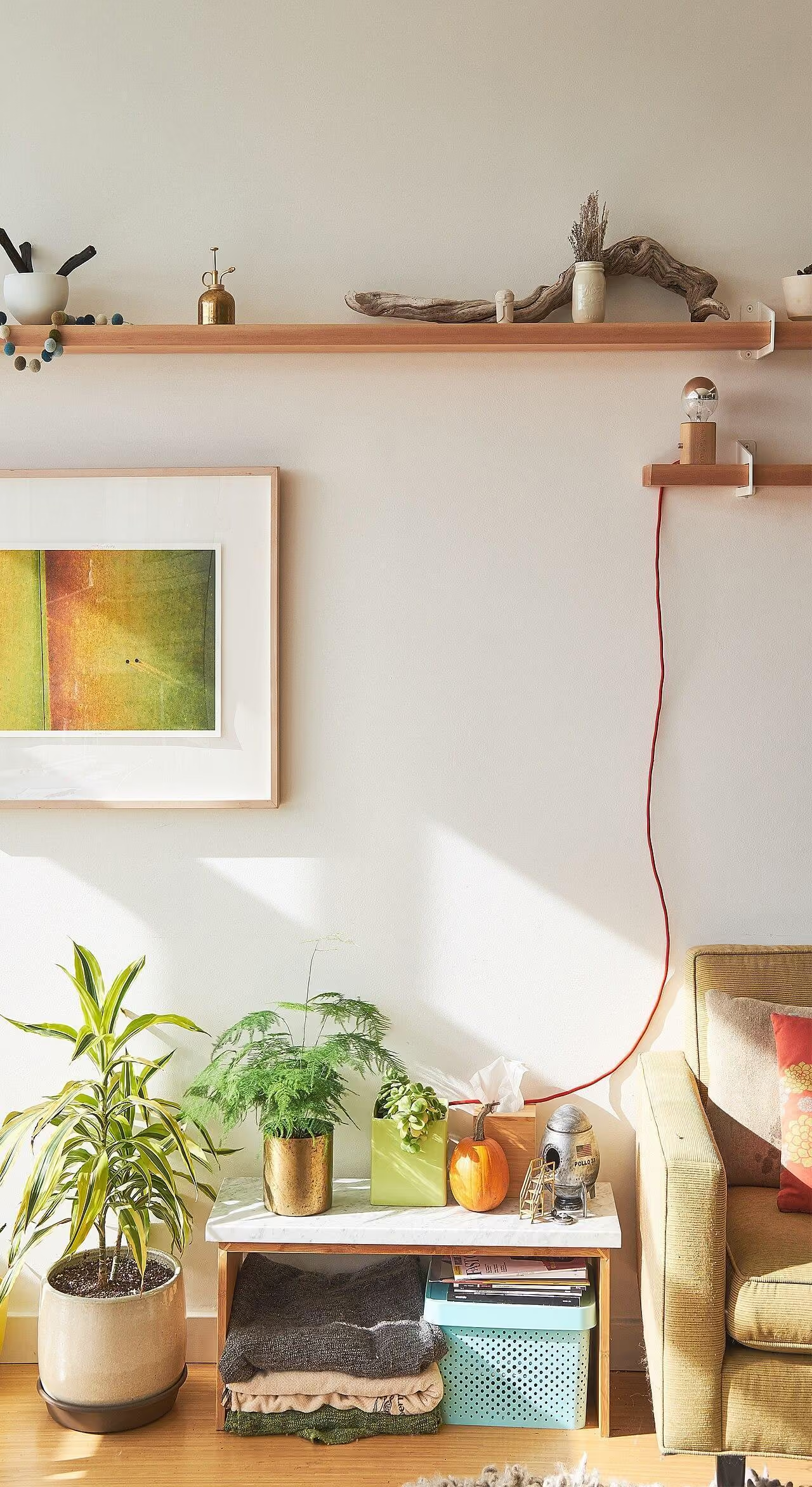
Choose a few objects that relate naturally to the resident. Vary their scale enough that the background reads clearly at the camera’s resolution, but do not turn this into a demand for a large styled collection. A closed storage area can keep active work and household packaging out of view. Leave some empty space around the objects that remain. The background should support attention to the speaker, not become a visual puzzle.
Muted pink, oatmeal and a darker accent can create depth without aggressive contrast. Matte finishes may reduce distracting reflections, though the exact material and lighting still need testing. Avoid placing personal addresses, family information or confidential documents in the frame. Mirrors can reveal more than expected, including activity elsewhere in the room, so check their reflected view carefully. A plant or artwork is optional, not a requirement for appearing competent. Use only objects and conditions that genuinely belong to the home.
Keep useful storage behind the visual calm
A cabinet in the background should earn its place in the room. Measure what it will store and decide how often it is opened. If every call requires moving household objects into another room, the design has not solved the storage problem. Give papers, chargers and active equipment defined homes close to where they are used. The front can remain visually simple while the interior is organized for real work.
Do not close running devices into unventilated compartments merely to remove them from view. Follow product guidance and preserve service access. Furniture stability and fixing requirements remain important even when the cabinet is chosen mainly for the camera frame. The room is still occupied by people, children or pets outside calls. A lightweight shelf arrangement that looks convincing on screen may be unsuitable for the actual objects or the household’s movement around it.
The clean view should be supported by accessible cable management behind it. Living with Exposed Cables in a Room You Cannot Rewire.
Separate visual polish from acoustic privacy
A tidy background does not prevent household sounds from being heard. Soft furnishings may reduce some reflections within the room, but sound isolation is a different technical problem. If calls are frequent, assess the real noise sources and discuss practical routines with other residents. Do not promise that a decorative panel will make an open living room private.
Spend according to the limiting factor. Better face light may improve calls more than expensive shelving. A camera orientation change may matter more than repainting. If the problem is noise or confidentiality, a different location may be necessary. Specialized acoustic work deserves an appropriate assessment rather than a shopping list based on appearance. The cost of a background should remain proportionate to the benefit, especially when the same furniture needs to serve the home long after the camera is switched off.
Review the view in ordinary conditions
Test the frame with the room in normal use, not only after a complete clear-up. Check morning and afternoon light, the visible doorway and any reflective surface. Keep the background easy to maintain and revise it when equipment or furniture changes. This approach is unsuitable if it compromises work comfort or exposes household privacy that cannot reasonably be protected.
In an imagined evening, the camera turns off and the shelf remains a useful part of the living room. The same lamp supports reading, the cabinet holds real belongings and the objects still feel personal. That continuity is the goal: a professional-looking view created through thoughtful ordinary design, without asking the home to become a permanent stage.
Check, record, then decide.
A proposed worksheet for your own observations. Use consistent units for dimensions and keep the conditions with each record.
Actual camera frame
Where to check At the normal working seat using the device and application used for calls.
- Record
- Save a private reference of the frame or sketch it; identify visible doorways, documents, reflections and household routes at ordinary call times.
- Read the result
- A styled shelf viewed from the room may not be what the camera or other participants actually see.
- If it does not work
- Adjust the orientation or choose a different suitable call position without restricting the household's normal movement.
Face and screen light
Where to check At the user's face, screen and background during typical morning and afternoon calls.
- Record
- Note time, window direction, source position, screen reflections and whether the face remains clear; compare settings rather than inventing brightness targets.
- Read the result
- Background polish is secondary to comfortable work and a usable actual video image.
- If it does not work
- Change suitable local light or position before purchasing decorative shelving or repainting.
Storage behind the frame
Where to check At the background cabinet and the places work materials normally accumulate.
- Record
- List visible and stored items, access frequency, device conditions and what must be moved before every call; identify private information separately from ordinary clutter.
- Read the result
- A convincing home background needs genuine storage rather than a repeated transfer of objects outside the camera.
- If it does not work
- Simplify the displayed area and add a credible work destination while keeping service access.
A practical trial
- Open the call preview in normal room conditions and check mirrors as well as directly visible objects.
- Test the frame with another household member using the normal route, agreeing privacy without staging a false office.
- Assess sound separately; a calm image does not establish speech privacy or suitability for confidential calls.
Compare the same scope
- Reorientation of a comfortable existing workstation
- Suitable face lighting and a limited authentic display
- Useful closed storage rather than a decorative camera-only set
Cost drivers to discuss: Actual lighting improvement and safe equipment placement; Storage capacity behind visual calm; Privacy needs that may require a different location.
Choose another route when: The background plan is unsuitable when it sacrifices work comfort or exposes household information and activity that cannot reasonably be protected.
The download is a blank record template. Your completed notes remain wherever you choose to keep them; this page has no measurement-submission service.
Sources for this guide
Each reference’s supported point and limits appear beside the relevant passage above. Product documentation applies to the named product, rather than every similar item or the photographed room.
Source text checked November 4, 2026. Specifications can change; confirm the current instructions for the exact item before ordering.
Your questions, considered.
Should I move my desk just to get a better background?
Only if the new position still supports comfortable work, useful light and suitable power. Start with the workstation and test the camera view from it, rather than sacrificing daily comfort for the frame.
Do I need a styled bookshelf behind me?
No. A few authentic objects, calm space and useful storage can be enough. Avoid filler displays or false professional cues; the background should remain a credible part of the home.
How do I check background privacy?
Inspect the real camera frame for documents, reflections, doorways and household routes, at normal call times. Discuss shared-space use. If confidential work needs more privacy, a different location may be necessary.
About this guide: written with AI assistance for TIANLICHUJU. These are general design ideas, not a measured survey or a completed client project. Any domestic vignette is fictional. Confirm product specifications, site dimensions and local requirements before construction; use qualified professionals for regulated work. Read our editorial approach or suggest a correction.