The decision, with conditions
- Choose this route when
- Choose a mostly clear table when the surrounding walls, curtains or lighting already provide character and the household regularly shares serving dishes or uses the surface between meals.
- Use the alternative when
- If flowers or a collection matter to you, use one genuinely movable arrangement with a stable identified destination that remains clear during a meal.
- Stop or change the plan when
- Reject a centerpiece or serving cabinet when its beauty depends on blocking reach, moving dishes into a route or making ordinary lunch require a lengthy dismantling routine.
Compare the practical options
| Decorative decision | Keep the meal usable by | Check |
|---|---|---|
| Permanent centerpiece | Testing real dishes and sightlines first | Can shared food move without clearing objects? |
| Sideboard display | Reserving a deliberate landing area | Does useful storage fit the actual serving inventory? |
| Mirror or wall art | Reviewing views from occupied chairs | Does a mirror multiply glare or clutter? |
| Occasional flowers or sculpture | Providing a manageable alternative location | Can the whole arrangement move without blocking a drawer? |
Let the room provide the decoration
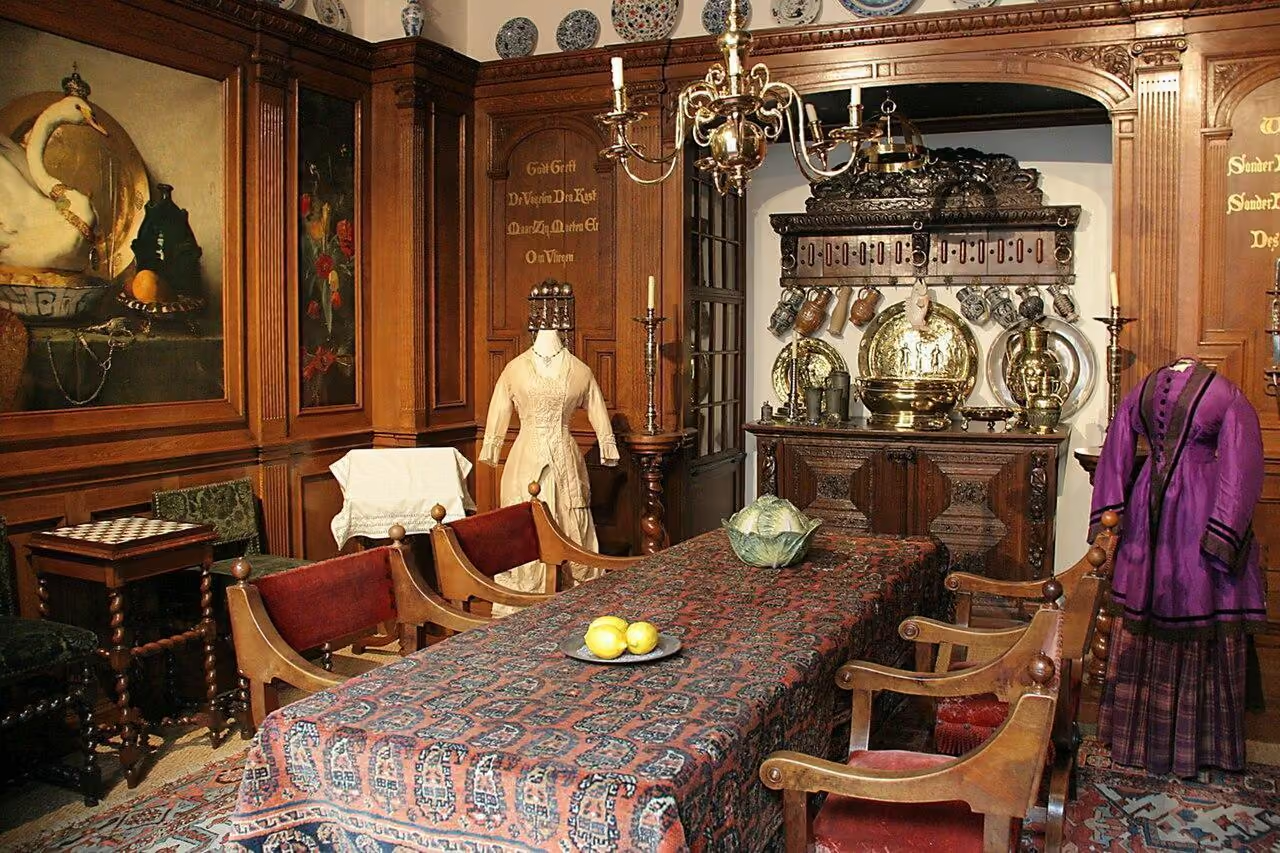
Use the surrounding decorative richness to release the table for meals. Compare its ordinary empty state with the amount of permanent ornament currently occupying it. If the room already has a strong wall or lighting focus, a clear central surface can feel intentional and remain ready for spontaneous lunch, shared work or serving.
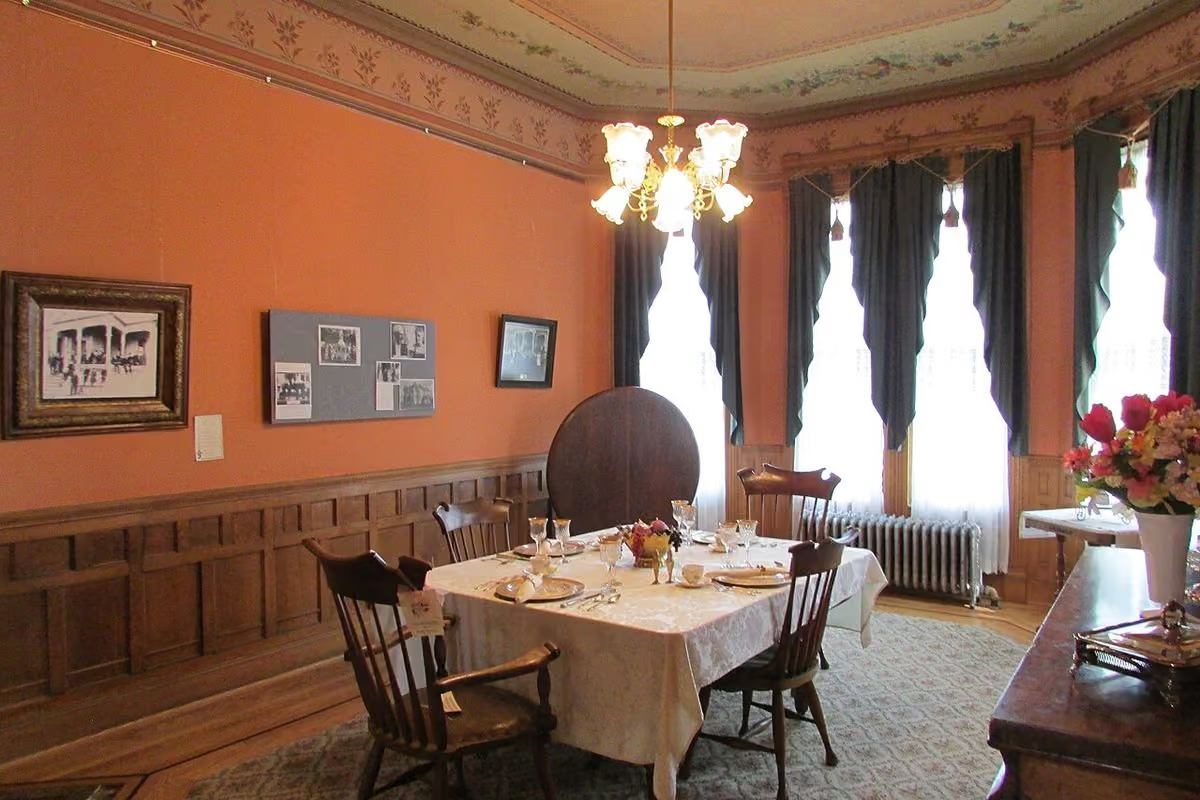
This approach is useful for a room that looks impressive when empty but feels crowded during dinner. The cause may be a large centerpiece, several candle arrangements, or decorative objects that occupy the only useful serving area. A modern Victorian setting can retain atmosphere through the room's architecture and materials. The practical question is what belongs on the table during actual use, and where occasional decorative items can go when their presence conflicts with the meal.
Lay the table before choosing the centerpiece
Lay out the meal that most often causes congestion, including water, shared food and the dishes that return for a second serving. Occupy every normal seat and note which object must be lifted or passed before another can be reached. Remove the centerpiece and repeat the same sequence. If the improvement is substantial, retain the cleared center and move visual emphasis to the wall or pendant. Only the space remaining after the meal works should be offered to decoration.
Repeat the test for the largest gathering you realistically host. The arrangement may need to change for that occasion, and that is acceptable. Distinguish everyday use from occasional entertaining rather than expecting one permanent composition to serve both. If the table doubles as a work or craft surface, include that activity too. A room's richness should not depend on keeping its most useful piece of furniture unavailable for the majority of the week.
Move the visual emphasis to a vertical surface
A framed artwork, mirror, or considered wall arrangement can provide a focal point without consuming serving space. Choose its position from the occupied seats and the approach to the room. A mirror can increase the apparent activity by reflecting a chandelier, a crowded cabinet, or a bright window, so test the actual reflection before treating it as a simple way to add light. The object should improve the view from more than one position, not only create symmetry in a front elevation.
If the walls already have decorative framing, give that structure room to be read. Too many small frames can make the surface feel fragmented. A larger work placed with regard to the panel dimensions may provide a calmer relationship. There is no need to fill every panel or repeat an ornament in each bay. Leaving some areas visually quiet can make the richer elements feel intentional. The room gains depth when its decorative effort is concentrated rather than evenly distributed across every available surface.
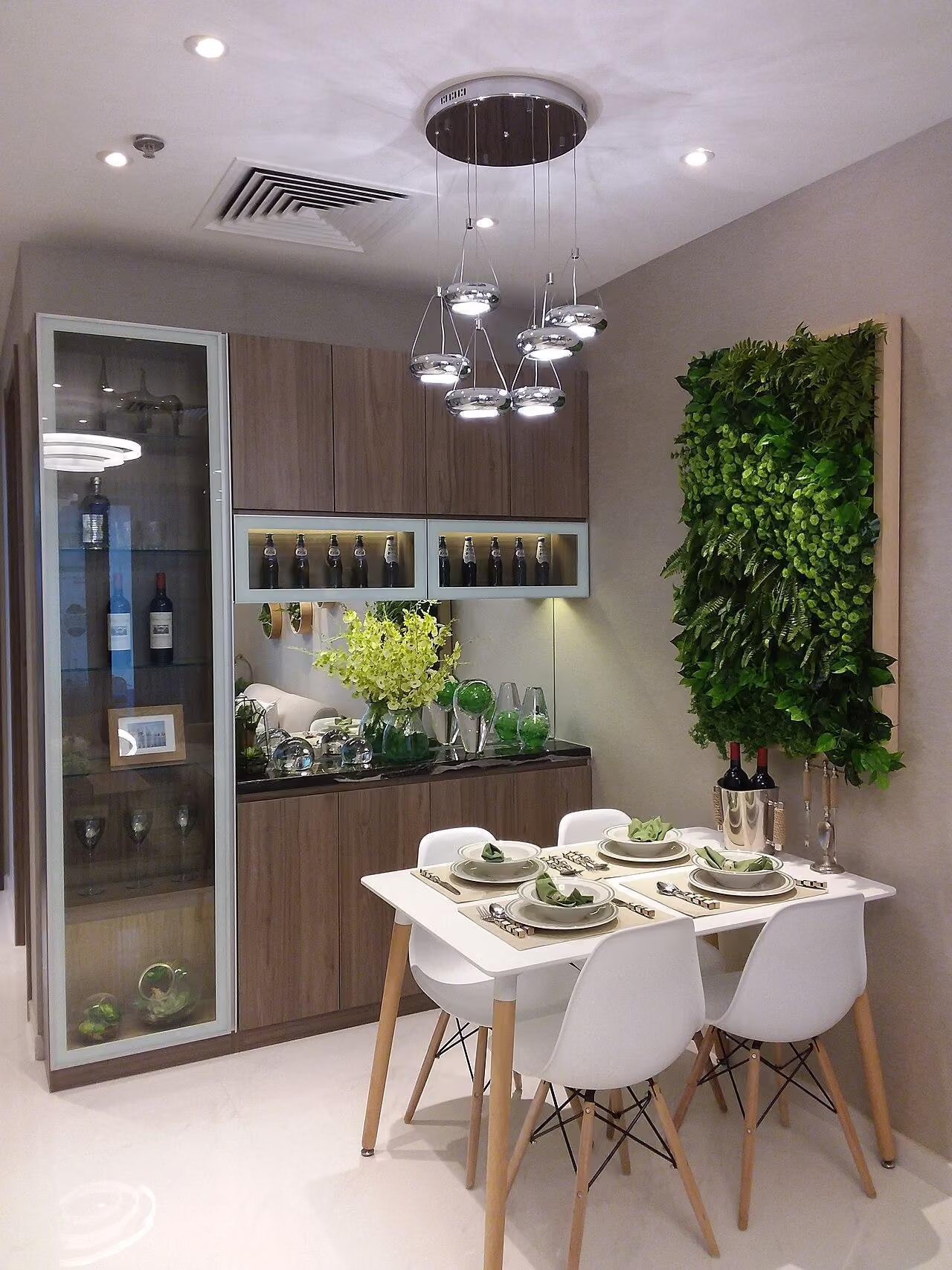
If the room is pale rather than richly colored, compare A pale dining room with enough visual contrast.
Give serving furniture a specific inventory
A sideboard can keep the tabletop clear when it holds the things used during a meal and provides a temporary landing surface. Decide what those things are before buying the piece. Plates, linens, serving dishes, and occasionally used objects require different internal arrangements. Check clear openings and drawer dimensions against the actual items. A grand cabinet with awkward compartments can be less useful than a quieter one with adjustable shelves and a surface at a convenient working height.
Keep part of the sideboard top available if it is meant to receive dishes or an occasional centerpiece. Filling it completely with decorative objects defeats that function. The room can still have a display area, but its boundary should be explicit. If hot dishes will be placed there, follow the surface's care requirements and use suitable protection. Do not assume a stone looking or dark finished top is immune to damage. The practical landing role needs to be compatible with the chosen material and finish.
Use lighting without creating another obstruction
A pendant can establish the dining zone and contribute to the room's character, but its scale and position need to suit the table and seated views. Evaluate glare, the visible light source, and the space between the fitting and people's sightlines. A highly decorative chandelier can be attractive without needing a matching tall centerpiece below it. The two may compete visually and physically, particularly when guests try to see each other across a modest table.
Test the evening atmosphere with the table occupied. Light should allow food, faces, and the route around the room to be seen comfortably. Separate room and table lighting can provide flexibility where the products and electrical installation support it. Use compatible equipment and appropriate installation advice for changes. The decorative effect should not depend on making the room so dim that the table is difficult to use, nor on an overhead source that flattens every rich surface into the same brightness.
For a warm evening effect that leaves the meal usable, read A Candlelit Mood without Depending on Open Flames.
Make occasional decoration genuinely movable
If you enjoy flowers or a sculptural arrangement, choose a scale and base that can be moved as a complete object. Give it an identified alternative position where it remains stable and does not block a drawer or route. A tray can help some arrangements, but it should be suitable for the weight and contents rather than used as a decorative promise of portability. The easier the move, the more likely the table will remain available for ordinary use.
Consider height while people are seated. A low arrangement may preserve conversation better than a tall narrow vase, but the actual shape and placement matter. Where candles are used, follow suitable product and fire precautions and keep the arrangement appropriate to the surrounding materials and activity. Decorative atmosphere does not justify placing open flames among crowded objects or within easy contact of moving arms. A room can feel warm through color and lighting without requiring a complex tabletop installation.
Keep a useful resting condition
Decide what the table looks like between meals. It may be completely clear, or it may hold one modest object that moves easily. Avoid a resting arrangement that becomes a barrier to spontaneous use. When someone wants to spread papers or share a simple lunch, the room should be ready without a lengthy reset. That readiness can be part of the luxury of a richly decorated room: the surroundings provide pleasure while the central surface remains generous.
Review the room after several dinners. If dishes still accumulate awkwardly or the centerpiece repeatedly ends up on the floor, revise the storage and landing plan. The final design should support the meal first and let the room's framing, color, and materials do the visual work. A clear table is not an absence of design. In a richly framed dining room, it can be the most deliberate decision, making space for the changing arrangement of people and food that gives the room its purpose.
Check, record, then decide.
A proposed worksheet for your own observations. Use consistent units for dimensions and keep the conditions with each record.
Real meal footprint
Where to check On the dining table with ordinary dishes, glasses, water and shared food positioned for occupied seats.
- Record
- List decoration moved to serve and measure usable remaining areas in centimeters.
- Read the result
- A table composition is not practical if the meal has to work around permanent display.
- If it does not work
- Move visual richness to the room and keep only easily relocated tabletop objects.
Serving furniture inventory
Where to check Inside the proposed sideboard and on the part of its top intended as a landing surface.
- Record
- Measure actual serving pieces against clear openings and identify the area reserved for temporary dishes.
- Read the result
- A grand cabinet is not useful serving furniture when its compartments or crowded top reject the real inventory.
- If it does not work
- Choose simpler adjustable storage and reduce display on the landing area.
Decoration movement and sightlines
Where to check Between the centerpiece's table position, each seated view and its proposed alternative location.
- Record
- Note manageable handling, blocked faces, unstable destinations and drawers obstructed after moving it.
- Read the result
- Movable decoration needs a credible complete route, not an assumption that it will go somewhere.
- If it does not work
- Reduce the arrangement or omit it between occasions.
A practical trial
- Host an ordinary meal through serving and clearing before choosing the permanent resting appearance of the table.
- Check any mirror from every occupied seat for reflected light sources, clutter and useful views.
- Test the evening fitting without a tall centerpiece and confirm practical lighting remains available for cleanup.
Compare the same scope
- Everyday and occasional meal settings
- Sideboard clear capacity and landing area
- Centerpiece size and alternative home
- Seated light and reflection conditions
Cost drivers to discuss: Serving storage construction; Wall art or mirror installation; Suitable adjustable dining lighting.
Choose another route when: A permanent centerpiece is unsuitable when it occupies necessary serving area or has no stable practical place during ordinary meals.
The download is a blank record template. Your completed notes remain wherever you choose to keep them; this page has no measurement-submission service.
Sources for this guide
Each reference’s supported point and limits appear beside the relevant passage above. Product documentation applies to the named product, rather than every similar item or the photographed room.
Source text checked November 4, 2026. Specifications can change; confirm the current instructions for the exact item before ordering.
Your questions, considered.
Can a formal dining room have an empty tabletop?
Yes. Rich walls, textiles, artwork and light can provide atmosphere while the central surface remains generous and ready for meals.
Where should a centerpiece go during dinner?
Give it an identified stable alternative place that does not obstruct storage or circulation. Choose an arrangement whose size and weight make the move realistic.
How can a sideboard help keep the table clear?
Use its interior for actual meal related contents and leave part of the top available for serving or temporary landing rather than filling every surface with display.
About this guide: written with AI assistance for TIANLICHUJU. These are general design ideas, not a measured survey or a completed client project. Any domestic vignette is fictional. Confirm product specifications, site dimensions and local requirements before construction; use qualified professionals for regulated work. Read our editorial approach or suggest a correction.