The decision, with conditions
- Choose this route when
- Choose a targeted relocation or limited concealment when the pillow-view record identifies a specific competing group and the morning dressing and return routine remains convenient.
- Use the alternative when
- Turn the desk, move a display to the dressing side, or provide a defined home for current clothing before adding a full screen or fitted storage wall.
- Stop or change the plan when
- Stop a concealment proposal if it blocks drawers, narrows the night route, or needs complete daily repacking that the occupant does not realistically want to perform.
Compare the practical options
| Visible conflict from bed | Targeted edit | Function to protect |
|---|---|---|
| Current clothing on a chair | A limited rail, hooks, or dedicated compartment | Convenient dressing and laundry return |
| Busy personal display | Move the group to a side or dressing view | The collection remains enjoyed rather than discarded |
| Unfinished work opposite the bed | Turn, group, or close the work area | A realistic end-of-work reset |
| Too many bedside objects | Measure a stable surface and use a small tray or drawer | Necessary items stay reachable |
Edit the view that actually matters at bedtime
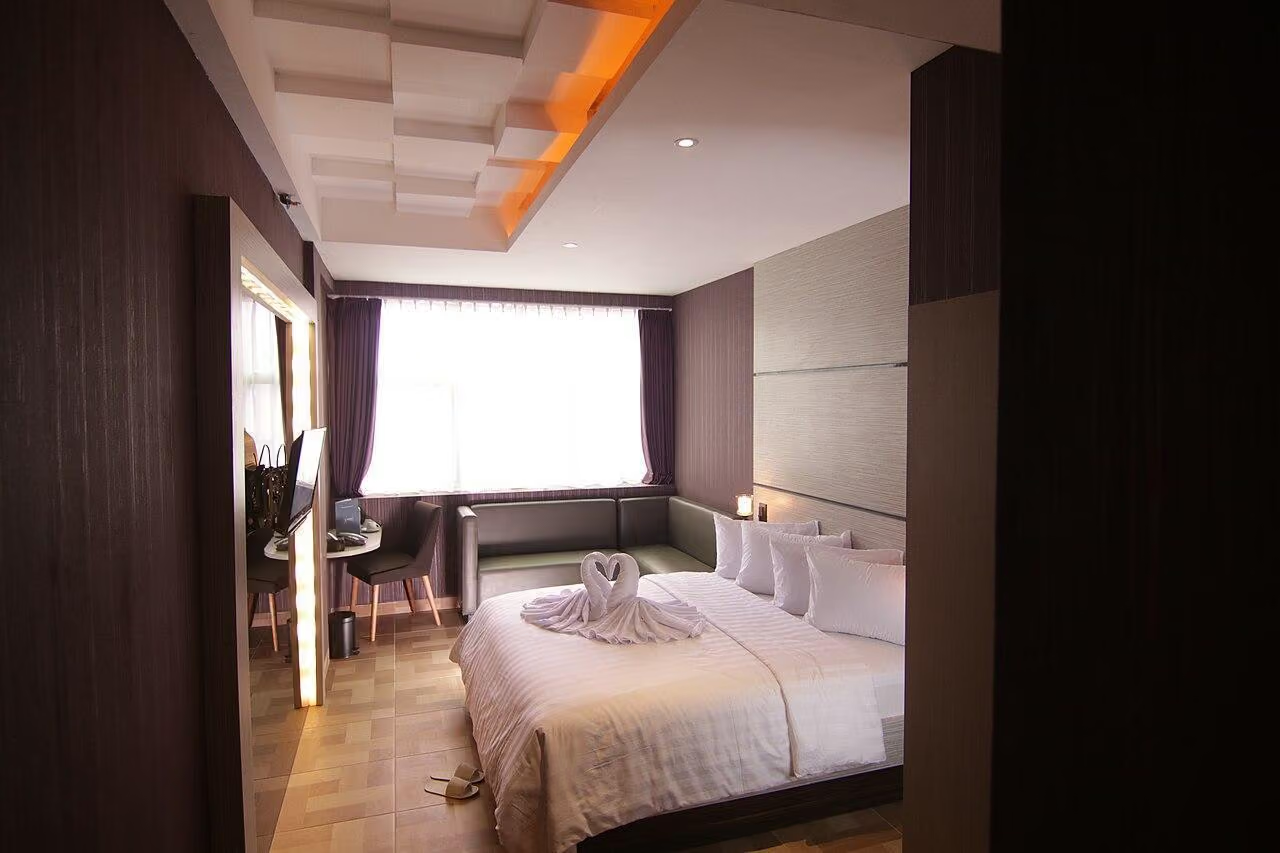
A bedroom can contain everything a person needs and still feel visually quiet from the bed. The useful distinction is between reducing possessions and reducing the number of competing things seen at one particular moment. A dressing area, books, work materials, and personal objects do not all need to occupy the view from the pillow. Minimalism becomes practical when it focuses attention instead of simply hiding necessities farther away.
Target the view that feels busy rather than removing belongings indiscriminately. Test the change without making dressing, bedside reach, or ending work less convenient.
Photograph from the pillow position
Photograph the ordinary pillow view before tidying. Label the strongest competing group, move only that group, and compare again under the same evening lighting.
Repeat the observation while sitting up and when entering the room. These views have different purposes. A personal display that feels pleasant from the doorway may be distracting directly opposite the pillow. Moving it to a side wall can preserve its place in the room without making it the dominant bedtime focus. Small relocations should be tested before new furniture is purchased.
Separate active clothing from the full wardrobe
Many bedrooms accumulate a chair holding clothing that is neither freshly laundered nor ready for washing. Removing the chair without another plan simply transfers the pile. Provide a defined place for current clothing, such as a limited rail, a few suitable hooks, or a dedicated compartment. Position it where dressing occurs rather than in the most visible resting field.
The capacity should reflect a realistic daily inventory, not encourage unlimited accumulation. Test the arrangement for a week and see whether it remains manageable. If it overflows immediately, the problem may be insufficient wardrobe access or an unclear laundry routine. A decorative screen can conceal the view, but it cannot resolve a system that requires more space or easier return of clothing.
For a more complete daily clothing routine in the same room, explore A Bedroom Dressing Corner That Does Not Need a Separate Room.
Use concealment selectively
A curtain, cupboard door, or freestanding screen can create a quieter field, but each consumes space and introduces an action. A screen that blocks a drawer or narrows the night route is a poor exchange. A wardrobe curtain may be useful in one room and frustrating in another where access is frequent. Test the full footprint and operation before deciding.
Temporary fabric can help compare the visual effect, provided it is safely placed and does not obstruct exits, ventilation, or heat sources. Look at the result from the bed under normal evening light. If a large concealed area makes the room feel heavy, a smaller intervention may be enough. The aim is not to make every object disappear simultaneously.
Protect the useful bedside surface
A calm bedside area still needs to hold a drink, a book, required equipment, and perhaps a phone. Measure those objects rather than choosing a ledge that only supports a lamp. The right surface can be modest without being precarious. A drawer or small tray may gather minor items while leaving the top ready for ordinary use.
Avoid cable routes that disappear behind an inaccessible headboard or cross the floor. A neat charging point should remain reachable and serviceable. If a device's light is bothersome, consider a suitable position or product setting rather than covering equipment in a way that conflicts with its instructions. Electrical changes and fixed installations need appropriate professional work.
Calm the composition through value and proportion
The most noticeable contrast may come from a single dark open rail or a bright package rather than the total quantity of objects. A related cabinet color, a quieter storage container, or a different position can reduce that competition. Minimalist design does not require every surface to be the same white; enough difference should remain for edges and controls to be legible.
Use a limited family of materials near the bed. Plain timber, linen, and a restrained painted surface can establish continuity while personal objects remain elsewhere. Keep the bed's size appropriate to the room and the occupants. Shrinking useful furniture merely to create a larger empty area can undermine the comfort that the quieter composition was intended to support.
Give work a clear stopping point
When a bedroom also contains a desk, the work view may remain active after the day ends. A closed laptop is not necessarily enough if papers and task equipment fill the opposite wall. Consider turning the desk, grouping work into a closable cabinet, or using a reversible screen where the plan allows. Start with the smallest change that creates a convincing boundary.
The boundary needs a practical reset. A tray for current papers, a place for the charger, and accessible storage can make ending work easier. Do not choose a cabinet desk that must be emptied completely before closing if that action is unlikely to happen. A good transition respects the real work routine rather than depending on an ideal one.
If the work area also needs a closable footprint, compare The Disappearing Desk in a Living Room.
Keep the room easy to clean and change
Fewer visible objects can reduce some surface cleaning, but added concealed construction can create other difficulties. Check dust gaps, curtain care, and access behind furniture. A screen that must be moved every day may be acceptable, but its weight and storage position should be tested. The quieter view should not add disproportionate hidden labor.
Compare reversible changes with custom work after the trial. Paint, ordinary storage, and a relocated display may solve the problem before a fitted wall is considered. If bespoke cabinetry is justified, preserve adjustable interiors and replacement access. The bedroom may later need a different desk, wardrobe arrangement, or bed size, and the design should not prevent those changes unnecessarily.
Review the morning as carefully as the evening
After the visual edit, get dressed and put away laundry using the proposed arrangement. Open every drawer and cupboard. If the morning becomes inconvenient, revise the placement rather than accepting the friction as the price of a calm image. The room must serve both the resting and active parts of the day.
In a fictional night, the view from the pillow is quiet while a favorite collection remains visible from the dressing side. Nothing important has been erased; attention has simply been organized. Confirm the pillow view, clothing system, bedside inventory, work boundary, night route, and morning test. A useful minimalist bedroom is a room with fewer conflicts, not necessarily a room with fewer belongings.
Check, record, then decide.
A proposed worksheet for your own observations. Use consistent units for dimensions and keep the conditions with each record.
Unstaged pillow view
Where to check From the normal resting and sitting positions on the bed, before tidying for a photograph.
- Record
- Photograph the current view and label the most visually insistent clothing, work, cables, packages, or displays; note the active lights.
- Read the result
- The image identifies one field of attention, not an objective clutter score or a measured effect on sleep.
- If it does not work
- Relocate a particular group to the dressing view rather than removing useful belongings throughout the whole room.
Current clothing cycle
Where to check At the chair or surface where worn-but-current clothing lands, then its proposed limited rail or compartment.
- Record
- For a week, tally items entering and leaving, note overflow, and measure the actual container or hanging envelope in centimeters.
- Read the result
- The cycle reveals a missing daily home, but cannot show that a screen will resolve insufficient wardrobe capacity.
- If it does not work
- Improve return access or allocate a realistic clothing zone before concealing an unmanaged pile with new furniture.
Concealment versus morning use
Where to check At a safely represented screen or curtain with the wardrobe, bed route, and desk in use.
- Record
- Draw thickness and open positions, then note dressing steps, blocked drawers, and whether work can close without complete repacking.
- Read the result
- A calmer resting view is not a successful trade if it creates repeated dressing or cleaning obstacles.
- If it does not work
- Move the display, turn the desk, or use a smaller closable group when a full screen consumes too much space.
A practical trial
- Repeat the photograph after moving only one competing group.
- Get dressed and return laundry before approving the calmer composition.
- Put the actual drink, book, and required equipment on the bedside surface.
Compare the same scope
- Targeted relocation versus new concealed construction
- Current clothing and work-reset capacity
- Screen operation, cleaning access, and bedside utility
Cost drivers to discuss: Made-to-measure screens or curtain tracks; New storage for an unresolved inventory; Fixed desk or wardrobe alterations.
Choose another route when: Concealment is unsuitable when its footprint blocks ordinary dressing, restricts the night route, or relies on a daily packing routine the occupant will not maintain.
The download is a blank record template. Your completed notes remain wherever you choose to keep them; this page has no measurement-submission service.
Sources for this guide
Each reference’s supported point and limits appear beside the relevant passage above. Product documentation applies to the named product, rather than every similar item or the photographed room.
Source text checked November 4, 2026. Specifications can change; confirm the current instructions for the exact item before ordering.
Your questions, considered.
Must a minimalist bedroom contain fewer belongings?
Not necessarily. This approach calms a particular resting view while keeping useful clothing, work, and personal objects in positions suited to their activities.
Will a screen fix a busy dressing area?
It may change the view, but it also takes space and introduces an action. Test its full footprint, drawer access, night route, and daily operation before buying.
How can a bedroom desk feel finished at night?
Provide a practical place for current papers, cables, and equipment, then test turning or screening the work view. Avoid a closure that requires an unrealistic complete emptying every evening.
About this guide: written with AI assistance for TIANLICHUJU. These are general design ideas, not a measured survey or a completed client project. Any domestic vignette is fictional. Confirm product specifications, site dimensions and local requirements before construction; use qualified professionals for regulated work. Read our editorial approach or suggest a correction.