The decision, with conditions
- Choose this route when
- Choose a compact entry grouping when a person can enter with bags, close the door and put belongings away while another person can still pass.
- Use the alternative when
- If a bench and console consume the door’s working territory, reduce the grouping to the most useful permitted storage and put less frequently used belongings elsewhere.
- Stop or change the plan when
- Do not rely on a tall unit’s weight or apparent steadiness as proof that it can stand unrestrained. Resolve required fixing and rental permission before calling the arrangement portable.
Compare the practical options
| Arrival element | What it handles | Placement test |
|---|---|---|
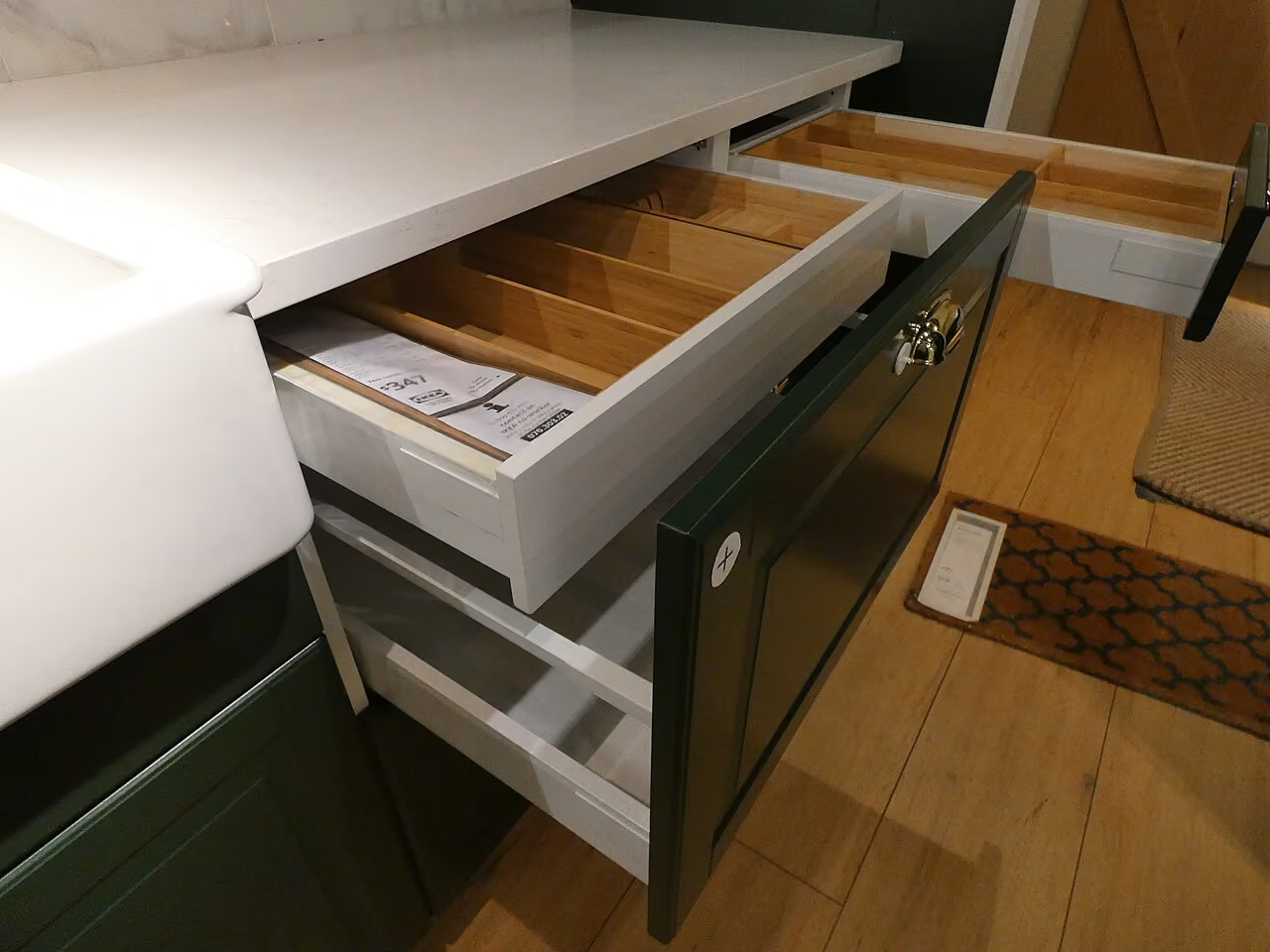
| Shallow closed cabinet | Daily shoes and visually busy belongings | Contents fit and opening doors do not block entry |
| Small clear tray | Keys and pocket items | Surface stays available instead of becoming a display |
| Seat or perch | Changing shoes | A seated person does not block arrival or departure |
| Wet-item drying position | Damp outerwear and equipment | Moisture is not shut into closed dry storage |
Make an arrival zone without inventing a hallway
Give arrival a sequence rather than trying to imitate a missing hallway. The person needs to open the door, put down carried items and move onward. Assign those actions before grouping a bench, hooks and console. A modest useful landing can work better than a complete entry set whose footprint turns every arrival into a squeeze.
Count those objects before choosing furniture. Include daily bags, seasonal coats, shoes, bicycle equipment or a dog lead if relevant. Consider what arrives wet and what needs to leave again the next morning. A narrow console may look elegant but offer no credible place for a backpack. A coat stand may accept several jackets while becoming unstable under heavy bags. The right combination may be a shallow closed cabinet, a few suitable hooks and a small tray rather than one object expected to do everything.
Protect the door’s working territory
Rehearse arriving with the bags normally carried and set them down where the proposed furniture will stand. Open and close the door fully, then let another person enter while shoes are being removed. Mark the places where bodies and the door actually overlap. Keep that territory clear even if a console would visually balance the sofa. If the arrival routine works only when one person waits outside, reduce the furniture rather than treating the pause as an unavoidable feature of apartment living.
If the apartment’s arrangement leaves no safe footprint beside the door, place the landing station a little farther into the room along the natural route. A slightly less immediate position can work better than a cabinet squeezed into the threshold. Required escape routes and building conditions need to be respected for the actual home. This is an optional storage improvement, so it should never rely on treating circulation as expendable. A living room that feels calm after arrival must first allow arrival to happen comfortably.
Door clearance is one part of a wider journey through the home. A Hallway That Makes Daily Movement Easier.
Choose storage that looks calm from the sofa
Because the entry station is visible from the main seating area, its outer face belongs to the living-room composition. Closed shoe storage can reduce visual noise, but check the usable depth and the sizes it accepts. A slim unit that fits only a few small shoes may fail the household’s real needs. Ventilation and cleaning matter too, particularly when damp footwear is involved. Do not pack wet items into a sealed compartment simply to restore a tidy appearance.
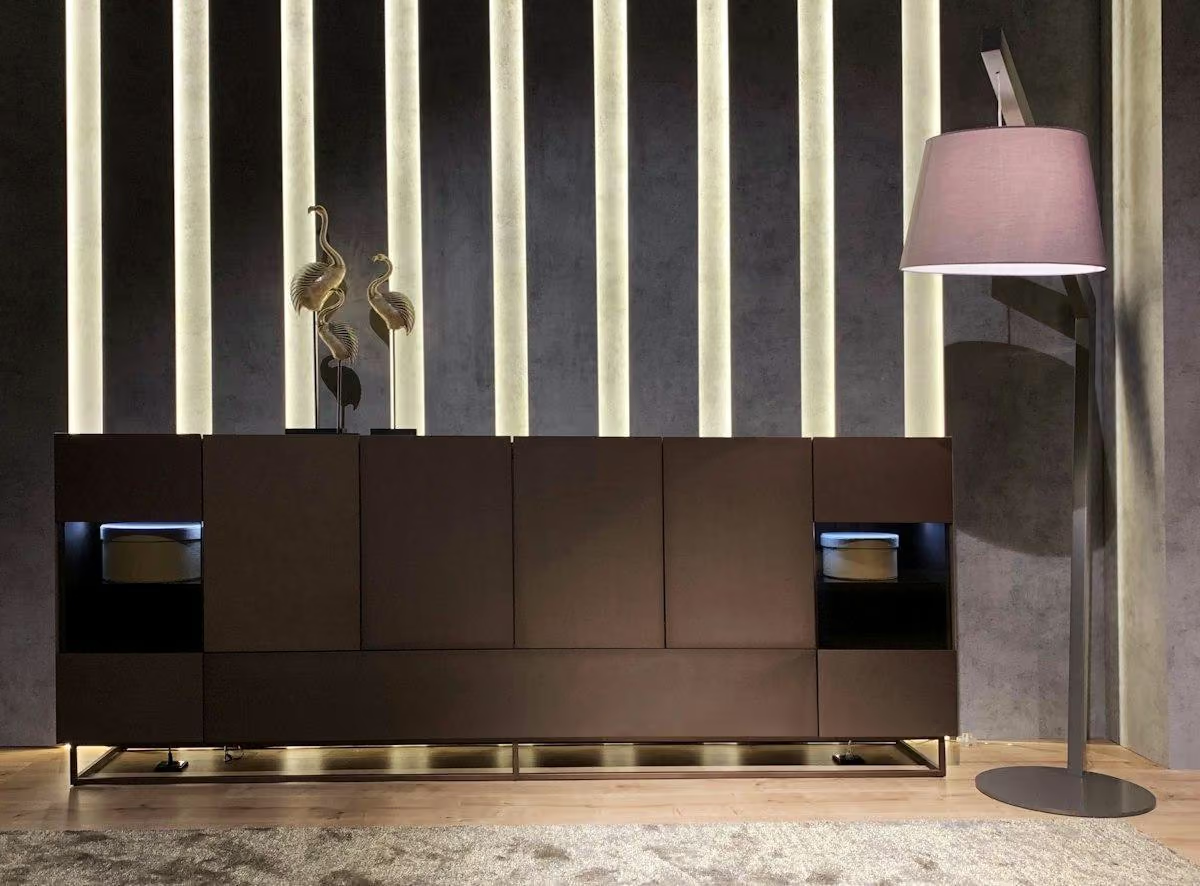
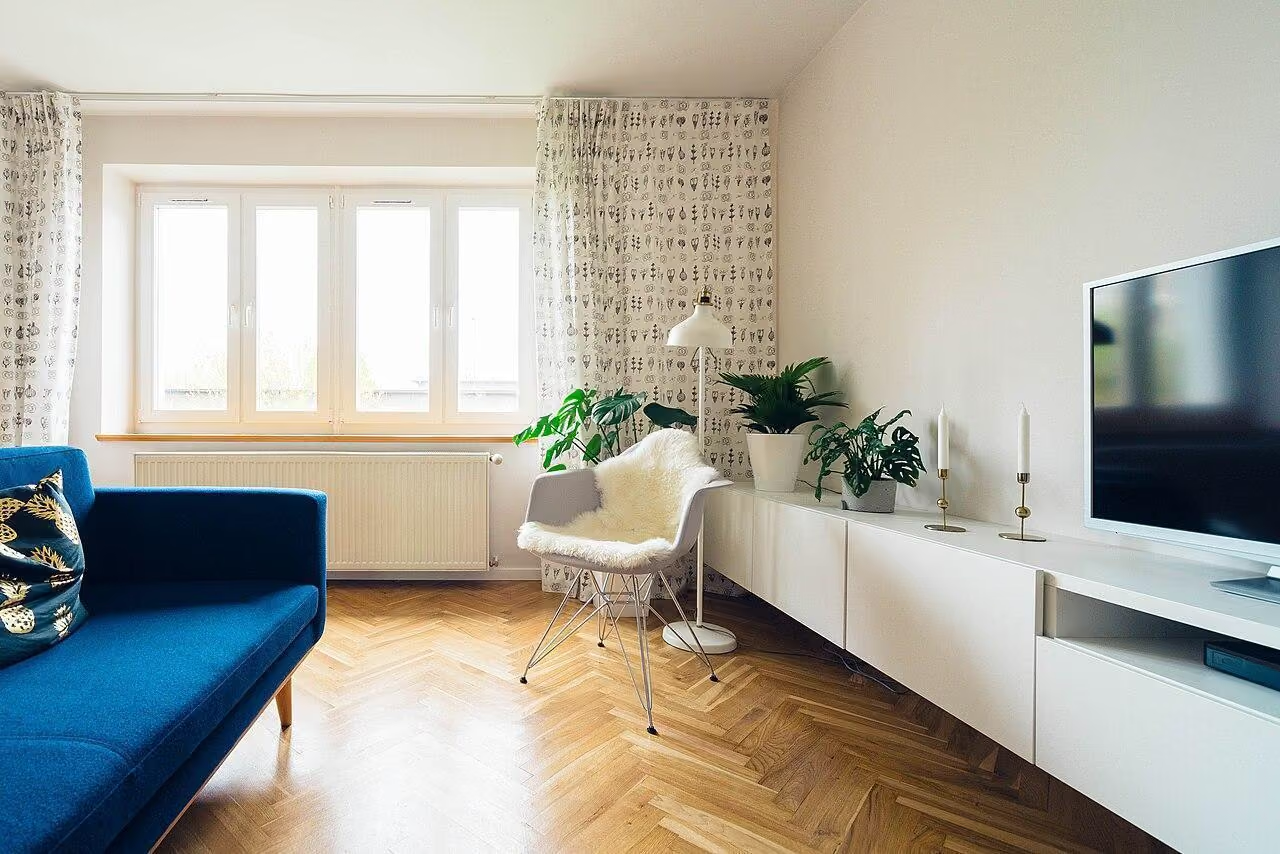
The top surface should have a clear purpose. A small tray for keys is useful; a large arrangement of ornaments may leave nowhere for the objects the cabinet was purchased to receive. Keep the daily landing space available and concentrate decoration elsewhere. Peach-gray, warm wood and one darker metal detail can relate the station to the room without announcing a separate theme. A familiar bowl or photograph is enough personality if the furniture and its contents already provide a strong visual presence.
Be realistic about freestanding stability
Portable furniture is appealing to renters and frequent movers, but it still needs to be safe. Follow the manufacturer’s anchoring guidance and confirm what fixing is permitted. Tall narrow cabinets and loaded coat stands deserve particular attention. A bag hung from a convenient projecting corner can change the balance of a light piece. Do not assume that avoiding wall drilling automatically makes an arrangement safer or more appropriate for a rental.
If suitable anchoring cannot be arranged, choose a different form rather than ignoring the requirement. A lower, broader unit may be more appropriate, depending on the product and available space. Check drawers and doors when open, and keep heavy objects where the furniture’s instructions allow them. The station will be used hurriedly with hands full, so its operation should be forgiving. A delicate latch or awkward pull may look precise but frustrate the exact moment the design is meant to improve.
Give wet and dry belongings different homes
An entry system becomes difficult to maintain when damp towels, umbrellas or shoes share closed storage with paper and electronics. Provide a suitable temporary drying location and protect vulnerable surfaces from water. A washable mat may help, but it needs to remain flat and stable and should be cleaned and dried appropriately. The system should not depend on leaving a wet pile hidden behind a cabinet door.
Light makes the landing station more legible. A nearby lamp or suitable wall light can illuminate the key tray and help someone see small wet patches on the floor. It should not create a cable across the entrance. A mirror is optional rather than essential; if included, place and fix it appropriately without projecting into a tight route. The useful sequence is simple: come in, put down the carried items, remove the outer layer and move into the room without scattering belongings along the way.
Paper needs a decision as well as a tray. If mail arrives here, provide a small temporary place for it and a realistic routine for moving it onward. Otherwise the landing surface becomes an expanding archive. Shared households may also benefit from separate key positions, so one person’s hurried departure does not disturb everybody else’s belongings.
Wet leads, towels and shoes need a drying sequence rather than another sealed compartment. A Dog-Friendly Entryway for Wet Walks.
Trial the sequence before buying a complete set
Use an existing low cabinet or stable table temporarily, with a clear tray and a defined shoe position. Observe one ordinary week. What still lands on the sofa? Which item has no home? Does the station overflow because it is too small, or because seasonal possessions need storage elsewhere? The answer may be a modest adjustment rather than a larger piece. Daily storage should handle daily belongings; it does not have to contain every coat the household owns.
Compare portable furniture with fitted storage only after the trial. A fitted unit can use an awkward recess efficiently, but it adds permissions, fabrication and installation costs. A portable station can move later, though it may use space less exactly. This scheme is unsuitable when safe circulation or stable furniture cannot be maintained. In an imagined evening, someone returns in the rain and places keys in the same small bowl before crossing to a warm lamp. The living room stays welcoming because the arrival has a place to end.
Check, record, then decide.
A proposed worksheet for your own observations. Use consistent units for dimensions and keep the conditions with each record.
Real arrival inventory
Where to check At the front door during an ordinary return with bags and outerwear.
- Record
- List daily shoes, bags, keys and seasonal variations; note where each lands now and whether it arrives damp or needs immediate departure access.
- Read the result
- A station must accept actual belongings, not merely display one symbolic coat and an empty key bowl.
- If it does not work
- Store reserves elsewhere and size the arrival function around the manageable daily selection.
Door and seated pause
Where to check Inside the entrance with the door operated and any shoe-changing seat occupied.
- Record
- Sketch full door swing, the carried-item route and the seat footprint; measure remaining clear space with units and describe passing conflicts.
- Read the result
- The closest cabinet position is not worthwhile if it constrains entry, departure or the resident's movement.
- If it does not work
- Move the station farther along the natural route or remove the seat where necessary.
Stability and moisture
Where to check At the chosen portable furniture, loaded hooks and proposed wet-item storage.
- Record
- Identify fixing instructions and permissions, actual hanging loads and a separate drying destination; note whether closed storage would receive damp objects.
- Read the result
- Portable furniture still needs suitable stability, and a closed front cannot resolve wet-item care.
- If it does not work
- Choose an appropriate lower form, arrange permitted fixing or separate drying from dry storage.
A practical trial
- Use an existing suitable cabinet for a normal week and record which belongings still reach the sofa.
- Rehearse entry with shopping while another person ties a shoe or retrieves a stored bag.
- Check the landing surface after mail arrives and define an onward destination before adding decorative objects.
Compare the same scope
- Portable shallow closed storage with suitable fixing
- A modest landing surface plus separately located daily shoes
- Fitted arrival storage only after permission and a successful trial
Cost drivers to discuss: Furniture stability, hardware and installation requirements; Capacity for actual footwear and daily bags; Moisture protection, cleaning and future portability.
Choose another route when: An arrival station is unsuitable if it obstructs the usable doorway or requires unstable furniture or inappropriate closed wet storage.
The download is a blank record template. Your completed notes remain wherever you choose to keep them; this page has no measurement-submission service.
Sources for this guide
Each reference’s supported point and limits appear beside the relevant passage above. Product documentation applies to the named product, rather than every similar item or the photographed room.
Source text checked November 4, 2026. Specifications can change; confirm the current instructions for the exact item before ordering.
Your questions, considered.
Does the entry cabinet have to sit directly beside the door?
No. A position slightly farther along the natural route may be better if the threshold has insufficient room. Preserve door operation and safe movement before pursuing the closest location.
Can freestanding furniture avoid all fixing requirements?
No. Follow the manufacturer's stability and anchoring guidance even for portable pieces, and confirm rental permission where needed. If suitable fixing cannot be arranged, choose a different appropriate furniture form.
How do I stop the key tray becoming a pile of mail?
Give paper a small temporary position and an onward routine. The landing surface should support arrival, not become permanent archive storage. Separate daily belongings from seasonal or reserve items.
About this guide: written with AI assistance for TIANLICHUJU. These are general design ideas, not a measured survey or a completed client project. Any domestic vignette is fictional. Confirm product specifications, site dimensions and local requirements before construction; use qualified professionals for regulated work. Read our editorial approach or suggest a correction.