The decision, with conditions
- Choose this route when
- Choose a plant corner when the identified plants suit their actual positions and every container can be inspected, watered and cleaned around without awkward handling.
- Use the alternative when
- Use fewer suitable plants or move them to a better location when the desired layered composition creates inaccessible pots or conditions the collection cannot readily support.
- Stop or change the plan when
- Do not expand the display when stability, water management or care access is unresolved, or when the proposed plants' needs and household suitability have not been established.
Compare the practical options
| Plant corner issue | Layout response | Check |
|---|---|---|
| Back pots are hard to inspect | Reduce density or change levels deliberately | Reach soil and container without lifting over another plant |
| Large pot needs watering elsewhere | Test the complete handling route | Weight when planted and watered, not just the empty vessel |
| Decorative stand seems convenient | Use support intended for the actual load | Stability, projecting legs and household access |
| Room corner looks bright | Assess conditions at each plant position | Use reliable guidance for the particular plants |
Design for the person with the watering can
Leave space for the person doing the care before filling the corner with another pot. Each container needs a route for inspection, watering and any required movement, while neighboring furniture and window controls remain usable. Start with plants suited to the actual conditions, then compose the visible levels. A smaller accessible group is preferable to a lush arrangement whose rear pots cannot be tended normally.
This approach suits someone who enjoys greenery but has limited time, floor area, or experience. It also helps an established collector whose plants have gradually occupied the room's circulation. Start with the collection you can care for and the conditions the room actually offers. Do not choose the corner solely because it looks empty. Light, access, water management, and the size of the plants as they grow are more important than completing a decorative triangle beside the window.
Observe the location before adding another pot
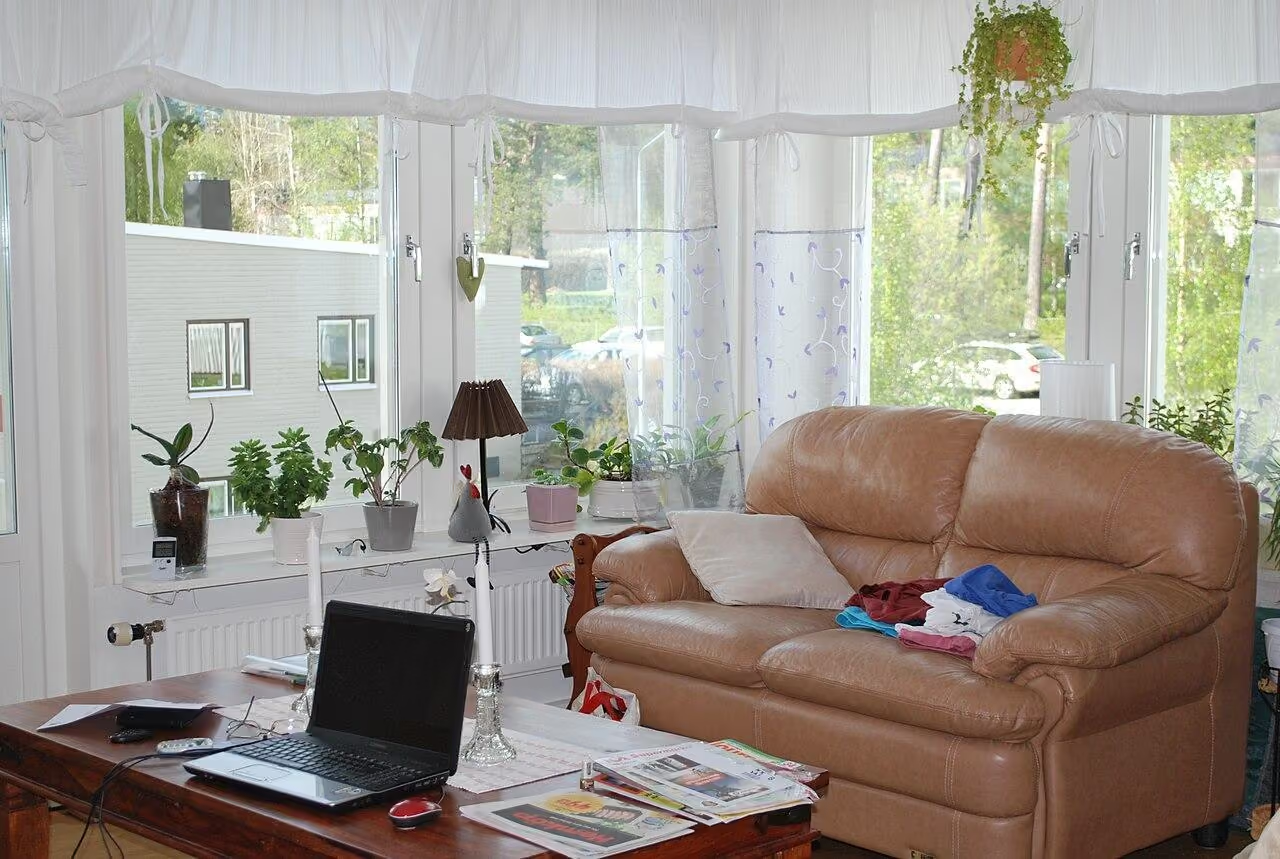
Assess each proposed plant position rather than calling the whole corner bright. Record the direct sun and shade encountered during ordinary hours, identify the plants and compare their particular requirements. If a position is unsuitable, change the location or collection before introducing equipment to compensate. The visual plan should follow a manageable care decision, not require every plant to accept the same conditions.
If the location is unsuitable for a desired plant, change the plant selection or the location rather than trying to solve the mismatch through styling. Specialized growing equipment can be useful in some circumstances, but it introduces its own operating, electrical, and spatial requirements. Decide whether that commitment fits the household before building the design around it. A smaller collection suited to the room can be more satisfying than a dramatic arrangement that depends on constant correction of conditions the space does not naturally provide.
Give each plant an accessible position
Arrange the pots so you can see the soil surface, reach the container, and inspect the plant without lifting it over another object. Leave a practical route for the largest watering vessel you intend to use. Different plants may need different routines, so visibility helps avoid treating the whole corner as one uniform task. A pot hidden at the back is easy to overlook. Its placement should be justified by the plant's needs and your access, not only by its height in a layered photograph.
Use stands deliberately. They can bring a smaller plant into better view and separate foliage, but their stability and load suitability matter. Check the complete pot's weight, including its contents and water, against the stand's intended use. A decorative stool is not automatically a suitable plant support. Keep projecting legs and low pots out of the room's main route, and consider the household's children or pets when assessing stability and access. Appropriate plant selection for those occupants is a separate question that deserves reliable species specific guidance.
Manage water as part of the interior design
The visible pot and the growing container may have different roles. Understand how excess water is managed in the arrangement you choose and how the inner container can be accessed. Do not assume that an attractive outer vessel protects the floor from every leak or condensation issue. Follow the plant and container's care guidance and inspect the surface beneath regularly. A corner should be designed so that a small problem can be noticed and addressed before it becomes hidden damage.
Choose a realistic place for watering tasks that cannot be completed in the corner. If a plant must be carried to another area, check the route, the weight, and the surfaces crossed. A large container that is easy to move when empty may become impractical once planted. Suitable movable equipment can help where intended for that load, but it should not introduce a rolling or unstable obstruction. If the care sequence is too demanding, reduce the container size or choose a different arrangement rather than relying on a promise to be more careful.
For contact and care decisions in the materials surrounding the pots, read Rustic living materials with smooth contact edges.
Let the room remain a room
Foliage can soften the edge of a cabinet or frame a chair, but it should not make either object difficult to use. Check drawer openings, curtain movement, outlets, and the route to the window. Leaves can grow into those spaces even when the initial arrangement fits. Allow for growth and a plan to reposition plants when needed. The corner is part of a living room with several functions, not a display that automatically takes priority over seating, light control, or cleaning.
Keep the number of pot styles manageable without demanding exact matches. A related material or color can connect the collection while different sizes respond to the plants. Avoid decorative layers that make it hard to reach the actual container. Loose objects around every pot can turn a simple care routine into a sequence of moving ornaments. The plants already provide variation in shape, color, and texture; the supporting objects can be comparatively quiet so their practical role remains clear.
When foliage and furniture begin to interrupt the outlook, see A Room with a View: Keeping the Interior in Conversation with the Window.
Store the care kit where the task begins
Identify the small tools and supplies you use regularly and give them an appropriate accessible home. Their storage should follow product instructions and household needs, particularly where children or pets are present. A watering can can be a pleasant visible object if it is genuinely used there, but the rest of the kit need not become part of the display. The important relationship is that the tools are easy to retrieve and return, making care less dependent on searching elsewhere in the home.
Build a simple observation habit around the corner rather than assuming every plant needs the same action on a fixed day. Follow reliable guidance for the particular plants and adjust based on their conditions. The interior layout should make that observation easy. You should be able to notice a change in a leaf or container without dismantling the arrangement. Good access supports better attention, while an inaccessible display encourages the collection to be treated as static decoration even though its needs change.
Review the corner after a full care cycle
Use the arrangement through the normal care tasks for the collection. Record which pot is awkward to reach, where water handling feels inconvenient, and whether cleaning beneath the stands is manageable. Make one practical adjustment at a time. The answer may be fewer plants, a different stand, a more accessible container, or a new location. Adding another decorative object is unlikely to solve a care problem. The corner should become easier to maintain as you learn from it.
The finished area can still be lush, but its richness should come from plants that suit their conditions and have enough room to be tended. A person can approach, inspect, and water without moving the sofa or balancing a heavy pot over a rug. That invisible allowance for care is what makes the display sustainable in ordinary life. The room gains living texture while keeping its routes and useful surfaces, and the collection remains something you engage with rather than a picture you struggle to preserve.
Check, record, then decide.
A proposed worksheet for your own observations. Use consistent units for dimensions and keep the conditions with each record.
Conditions at individual pots
Where to check At each proposed plant position, including low, rear and window-adjacent levels across ordinary daylight hours.
- Record
- Record direct sun periods, shade, nearby heating or cooling outlets and reliable identification of each plant.
- Read the result
- A corner appearing bright from the doorway may provide different conditions at the actual containers.
- If it does not work
- Choose a more suitable position or collection using reliable plant-specific care guidance.
Care access and growth space
Where to check Between stands, foliage, nearby furniture and the route used with the intended watering vessel.
- Record
- Note which soil surfaces or pots cannot be inspected and measure obstructed openings in centimeters.
- Read the result
- A layered display is too dense when routine observation requires lifting plants over other objects.
- If it does not work
- Reduce the group or change levels using suitable stable supports.
Water and complete container handling
Where to check Beneath outer pots and along any route to the place where watering or drainage occurs.
- Record
- Record container arrangement, inspection access, complete stated weight where available and surfaces crossed.
- Read the result
- An ornamental outer pot does not prove protection from every moisture problem.
- If it does not work
- Use a more manageable container or revise the care location and floor protection appropriately.
A practical trial
- Complete the normal care tasks for the existing collection before increasing the number of plants.
- Open nearby drawers, curtains and windows to check that the plants do not remove ordinary room functions.
- Match stands to intended loads and obtain reliable species-specific guidance where household children or pets affect plant selection.
Compare the same scope
- Actual plant and container inventory
- Conditions at each position
- Support suitability and complete weight
- Watering, inspection and cleaning route
Cost drivers to discuss: Suitable containers and supports; Access or surface-protection changes; Optional growing equipment and its installation.
Choose another route when: The decorative corner is unsuitable when its conditions do not support the chosen plants or its care routine exceeds manageable access and handling.
The download is a blank record template. Your completed notes remain wherever you choose to keep them; this page has no measurement-submission service.
Sources for this guide
Each reference’s supported point and limits appear beside the relevant passage above. Product documentation applies to the named product, rather than every similar item or the photographed room.
- University of Minnesota Extension: Lighting for Indoor Plants · Read the supported point and its limits
Source text checked November 4, 2026. Specifications can change; confirm the current instructions for the exact item before ordering.
Your questions, considered.
How much space should I leave around a plant corner?
Enough to inspect and tend each plant and to use nearby furniture, windows and treatments. Test with the actual pots and watering route rather than a decorative spacing rule.
Can a decorative stool support a large plant?
Only when its intended use and capacity suit the complete container. Include contents and water when assessing weight, and check stability and projections.
How do I prevent a plant display damaging the floor?
Understand the container's water management, follow its care requirements and inspect beneath it. An attractive outer pot should not be assumed to prevent every leak or moisture issue.
About this guide: written with AI assistance for TIANLICHUJU. These are general design ideas, not a measured survey or a completed client project. Any domestic vignette is fictional. Confirm product specifications, site dimensions and local requirements before construction; use qualified professionals for regulated work. Read our editorial approach or suggest a correction.