The decision, with conditions
- Choose this route when
- Choose the arrangement when the normal meal can arrive, remain on the table, and leave without repeatedly moving diners, while seats and useful evening light support staying comfortably.
- Use the alternative when
- Use a movable support, a better chair, or a revised serving sequence when a themed renovation would add little to the actual hosting problem.
- Stop or change the plan when
- Stop oversizing the permanent table or filling the sideboard with display when either reduces daily access or prevents the host using the support during the meal.
Compare the practical options
| Meal stage | Support to provide | Occupied trial |
|---|---|---|
| Food arrives | A clear kitchen-to-table route | Carry an ordinary tray past seated diners |
| Shared dishes wait | An available sideboard or temporary surface | Check doors and prevent permanent display overflow |
| Guests stay after eating | Seats with appropriate support and usable light | Try a full meal rather than a brief showroom sit |
| Used dishes leave | A return path and sensible landing point | Observe repeated trips and interruptions |
Unhurried meals begin before anyone sits down
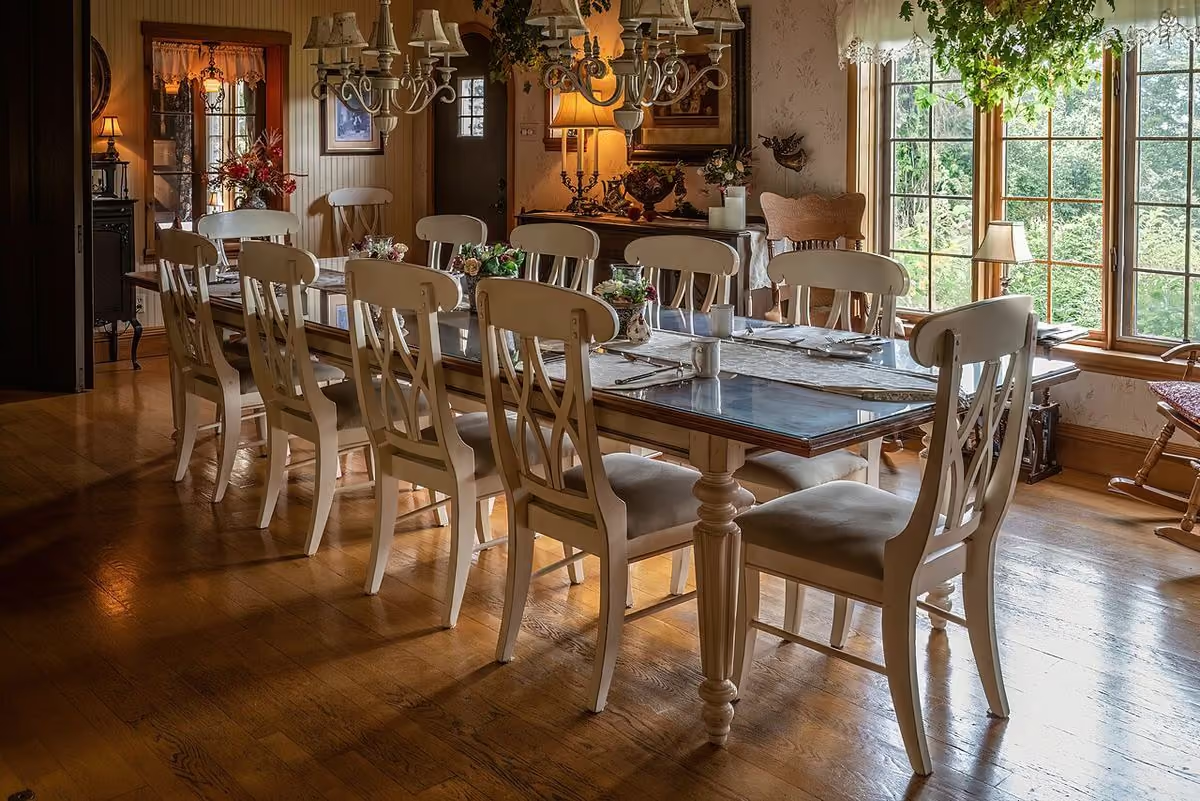
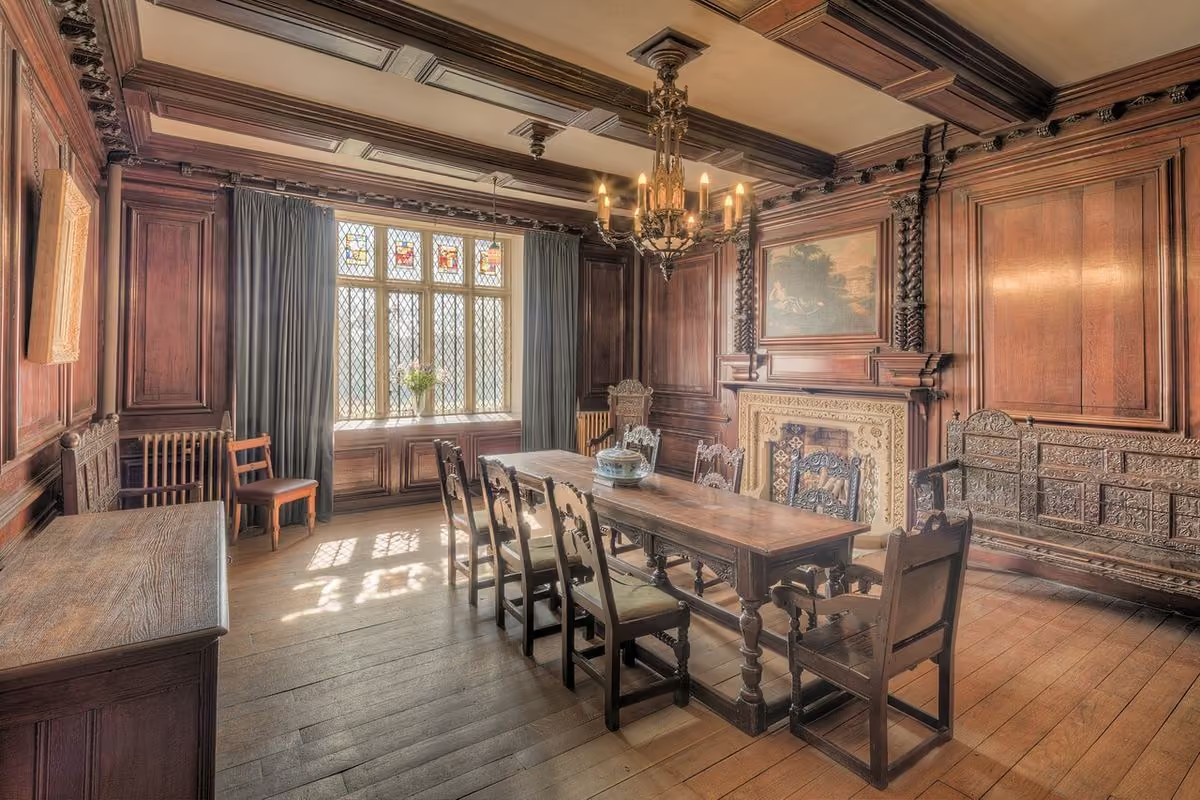
A Mediterranean-inspired dining room is often imagined through long meals, warm texture, and easy conversation. Those associations can be translated into an ordinary home without adding themed accessories. The practical foundation is a clear route from kitchen to table, a place for serving dishes, comfortable seats, and light that supports faces. The room feels generous when the work of hospitality is easy to carry out.
Treat the regional reference as a mood, not a universal dining practice. Plan the household's own food, serving stages, seats, and interruptions; those determine whether an evening feels unhurried.
Follow the serving sequence
Write the route for a familiar meal from preparation through clearing. Mark where food waits, who leaves the table, and which move interrupts conversation before choosing new furniture.
Test it with the table and chairs occupied. An empty room can hide the moment when the host cannot pass behind a guest or open the serving cupboard. Use a tray and ordinary dishes, taking care during the trial. The goal is not to create a formal service plan, but to understand the movements that determine whether the meal feels easy or repeatedly interrupted.
Choose the table for the usual gathering
Begin with the everyday number of diners and the real food footprint. A large table can feel generous, but it may also consume the space needed to serve. A smaller table with a useful side surface can be more comfortable in a modest room. Compare the arrangements rather than assuming more tabletop always means better hospitality.
If the table extends, test the expanded configuration and the storage of the leaves. Check the base and legroom at each place. An occasional extra seat should not depend on someone accepting an obstructed position. The design can include a flexible guest plan while remaining well proportioned for the meal that happens most often.
For occasional guests rather than a permanently larger table, examine An Extendable Table for a Home That Hosts Occasionally.
Make the side surface genuinely available
A sideboard can hold plates and linens while receiving dishes during dinner. Its top should remain useful when the meal begins. Avoid filling it permanently with objects that must be relocated each time. A small ceramic or lamp may belong there, but the practical landing area needs a defined clear zone.
Measure the stored pieces and check the doors with chairs occupied. A cupboard that opens only before everyone sits is less useful for mid-meal access. Draw the serving sequence with the doors open. Where a fixed unit would crowd the room, a trolley or ordinary side table may provide the needed support with less permanence and easier adjustment.
To choose the smallest useful serving support, compare A minimalist dining room that has somewhere to serve.
Give seating more attention than the centerpiece
Comfortable chairs are an investment in the length and quality of the gathering. Test seat shape, back support, armrests, and the relationship to the table apron. A rustic bench or woven chair may be attractive but should be judged by actual use. Offer different suitable seats where regular occupants or guests have different needs.
Check handling as well as sitting. A heavy chair may be difficult to move in a narrow room, while a light one may not feel reassuring to every user. Use the actual floor in the trial if possible. An informal atmosphere does not require casual attention to comfort; it becomes more convincing when the furniture accommodates people without explanation.
Build warmth with a limited material family
Chalk-colored walls, clay tones, timber, linen, and a small amount of textured ceramic can establish the mood. Choose which material carries the strongest character and let the others support it. A rough wall, heavily patterned tile, carved table, and numerous accessories can make the room busier than the unhurried atmosphere suggests.
Read the care instructions for the actual finishes. Porous-looking materials vary widely in performance, and natural appearance does not establish easy maintenance. Keep contact edges smooth and surfaces suitable for food and drinks in their intended role. Warmth should be something the household can live with, not a collection of fragile finishes that make every meal anxious.
Let the evening light include the room edge
A pendant can mark the table, but it should not obstruct eye contact or create glare in glasses and polished surfaces. Test the fitting from each seat and through the serving route. Dimming may be useful when compatible with the chosen source and installation. The right height and distribution depend on the room rather than a copied rule.
A gentle secondary source near the sideboard can keep the surrounding room present when the table light is low. It also helps the practical act of serving. The two layers should cooperate rather than compete as focal points. Fixed electrical changes need appropriate professional work, and components should remain accessible for replacement.
Keep sound and climate part of comfort
Hard floors and walls can create a lively acoustic environment. Textiles, upholstery, and the seating arrangement may help, but the effect depends on the particular room. Compare conversation before and after a temporary change rather than promising a specific result from a decorative rug. More substantial concerns may benefit from appropriate advice.
Likewise, the room's temperature and airflow should suit its actual location. An imported visual reference does not determine local comfort. Keep necessary windows, vents, and systems accessible. Curtains and furniture should be positioned with the building's requirements in mind. The relaxed mood is supported by the room working well, not by ignoring its ordinary environmental needs.
Plan a simple end to the meal
The return route for used dishes matters as much as their arrival. A tray, nearby landing surface, or clear kitchen connection can reduce repeated trips. Store linens and protective items close enough that restoring the room is straightforward. The dining area should be ready for ordinary use without an elaborate reset after every gathering.
Compare new furniture with changes to what is already owned. A repositioned cupboard or a better chair may provide more value than a themed renovation. Ask how finishes and upholstery can be renewed, and keep relevant product information. A room made for gathering should remain adaptable as the household's size and habits change.
Let hospitality be the final test
Use the arrangement for a normal meal before buying every finishing object. Notice who gets up, where dishes accumulate, and which movement interrupts conversation. Resolve the most consequential friction first. The atmosphere will often improve more through that change than through another decorative bowl or wall feature.
In a fictional supper, the food arrives easily, the host can sit, and a shared dish has somewhere to wait without crowding anyone's plate. The warm materials provide a setting, but the room's generosity comes from its plan. Confirm serving, occupied clearances, table size, seating, useful light, care, and reset. The unhurried meal begins with a room that does not keep asking people to work around it.
Check, record, then decide.
A proposed worksheet for your own observations. Use consistent units for dimensions and keep the conditions with each record.
Host's interrupted meal
Where to check From preparation through serving, seated eating, clearing, and returning used dishes to the kitchen.
- Record
- List each stage of a familiar meal, who leaves the table, where dishes wait, and which movement interrupts conversation.
- Read the result
- The sequence identifies practical friction for that meal; it does not validate a universal Mediterranean dining custom or hosting duration.
- If it does not work
- Change the staging location or serving method before buying themed accessories that leave the same interruptions unchanged.
Side surface during service
Where to check At the proposed sideboard with every chair occupied and the cupboard's actual contents represented.
- Record
- Mark the clear top needed for waiting dishes, door swings, stored platter dimensions in centimeters, and objects that must move before serving.
- Read the result
- A large cabinet can offer little usable support after permanent displays; the trial does not establish its surface's heat tolerance.
- If it does not work
- Limit the display, reassign tableware, or use a movable landing surface outside the occupied chair zone.
Long conversation setting
Where to check At all intended seats after the normal meal, with the intended table and room-edge lights active.
- Record
- Note seat changes, missing support, faces left in shadow, direct sources, and whether someone can still serve without brightening the whole room.
- Read the result
- These subjective observations apply to the represented diners and scene, not an acoustic, ergonomic, or lighting-performance certification.
- If it does not work
- Improve the relevant chair or secondary light rather than increasing table decoration to create a relaxed mood.
A practical trial
- Test clearing as carefully as the arrival of food.
- Represent the usual gathering before trialing an occasional extended table.
- Keep window, ventilation, and heating access outside the decorative compromise.
Compare the same scope
- Complete serving and return sequence
- Comfortable seats and genuinely available support
- Practical light, finish care, and end-of-meal reset
Cost drivers to discuss: Replacing unsuitable daily seating; Adding or relocating serving storage; Lighting work beyond a single pendant.
Choose another route when: A larger table or permanent sideboard is unsuitable when it prevents the host from serving comfortably or reduces the room's normal circulation for an occasional event.
The download is a blank record template. Your completed notes remain wherever you choose to keep them; this page has no measurement-submission service.
Sources for this guide
Each reference’s supported point and limits appear beside the relevant passage above. Product documentation applies to the named product, rather than every similar item or the photographed room.
Source text checked November 4, 2026. Specifications can change; confirm the current instructions for the exact item before ordering.
Your questions, considered.
What makes a dining room feel relaxed during hosting?
Clear serving and return routes, a useful landing surface, comfortable seats, and enough light for faces and movement can reduce interruptions more effectively than themed accessories.
Should a sideboard remain decorated during dinner?
Only to the extent that its practical landing zone stays available. Measure stored dishes and test its doors while the table is occupied.
How should occasional large dinners influence table size?
Plan the usual gathering first, then test an extension or flexible guest arrangement separately, including base positions, chair access, and leaf storage.
About this guide: written with AI assistance for TIANLICHUJU. These are general design ideas, not a measured survey or a completed client project. Any domestic vignette is fictional. Confirm product specifications, site dimensions and local requirements before construction; use qualified professionals for regulated work. Read our editorial approach or suggest a correction.