The decision, with conditions
- Choose this route when
- Choose cork when an identified product is specified for the intended surface and its substrate, fixing, exposure and care suit the room's actual contact.
- Use the alternative when
- Use a limited suitable cork application when the main goal is visual warmth, leaving demanding floor or wet-area tasks to another appropriately specified material.
- Stop or change the plan when
- Do not extend a decorative or pinboard product into another role, or approve performance claims, until the exact selected assembly supplies relevant documentation.
Compare the practical options
| Cork application decision | Confirm first | What the visual sample cannot prove |
|---|---|---|
| Flooring versus wall or pinboard product | Manufacturer's intended use | One cork sheet suits every application |
| Existing substrate | Preparation and fixing system | A covering resolves damp or loose material below |
| Edges and transitions | Door clearance and adjoining surface detail | Thickness is only a decorative choice |
| Performance expectation | Relevant documented product or assembly information | A natural texture automatically provides isolation or wet-area suitability |
Identify the cork product before imagining the room
Name the intended job first: pinning notes, covering a wall or forming a walking surface. Then request an actual product for that application, including its backing or core rather than only the visible cork. Compare a physical sample with the room's smoother surfaces after those requirements are clear. Warm appearance is a design quality; it is not an installation or performance specification.
This direction suits people who enjoy natural variation and want warmth without a strongly rustic theme. It is unsuitable when a product is chosen only because it is called cork, with no regard for moisture, wear, fixing or care. Ask for the manufacturer’s information and seek competent installation advice where needed. The natural appearance should not become a reason to skip technical questions. A quiet modern room depends on well-resolved edges and surfaces as much as on the material’s initial appeal.
Give the texture a deliberate area
Decide what role the cork will play. A small notice surface has a different visual responsibility from a whole wall or floor. A broad application can become a dominant color field, while a limited panel may act as a tactile accent. View a representative sample at the intended scale where possible. Fine flecks and larger patterns can read quite differently from across the room, particularly beside a patterned floor or pronounced timber grain.
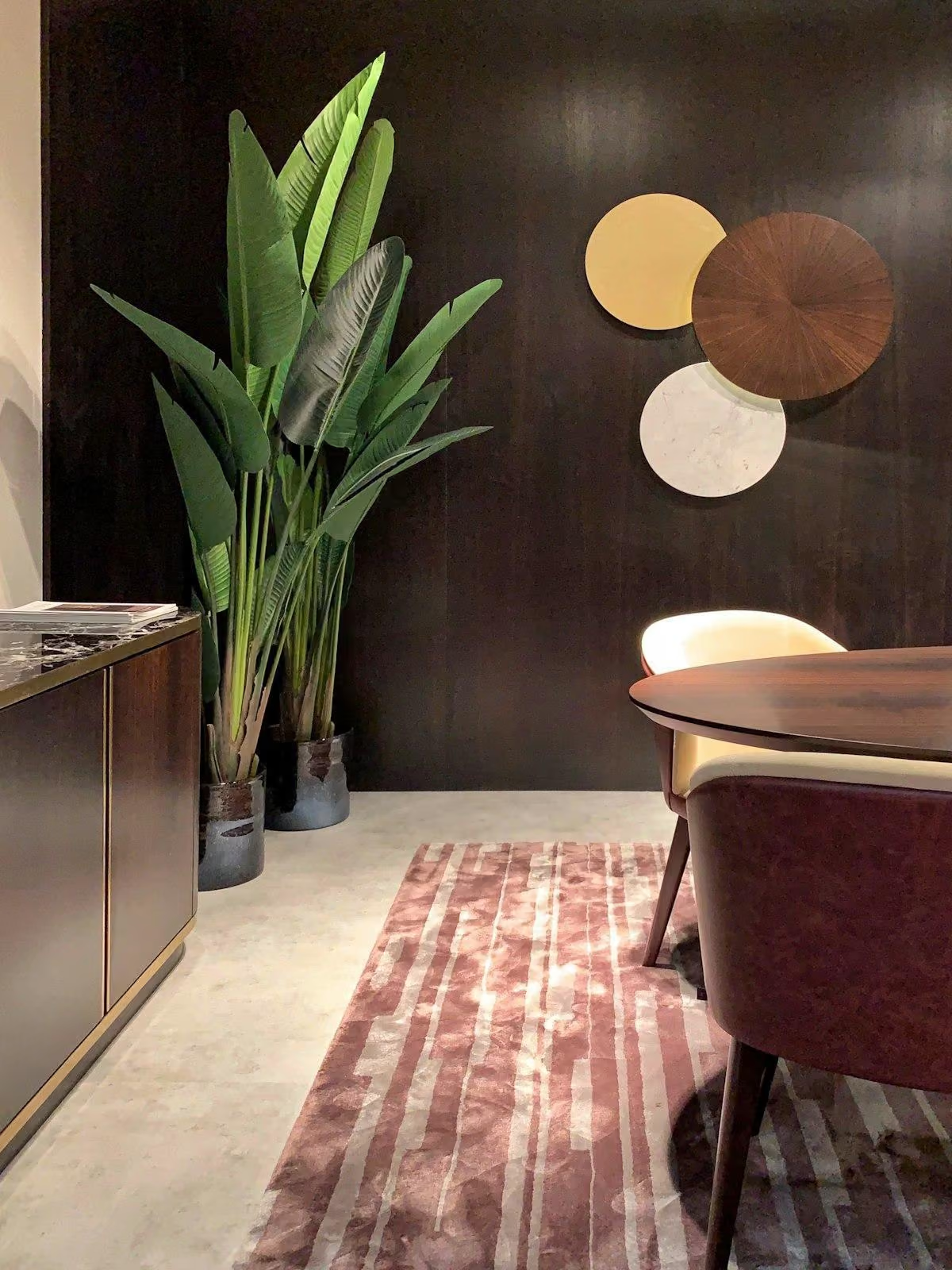
Muted pink, warm brown and chalk can create a coherent palette, but compare the actual undertones. Some cork products appear more golden, reddish or dark than expected. The surrounding finishes should be tested together in the room’s light. Avoid adding several other natural textures simply to reinforce the theme. A smooth cabinet or plain textile can give the cork enough contrast to feel intentional. The room does not need to become a collection of materials advertised as warm or organic.
Fluted wood shows how a textured field can stay deliberate when it has one clear role. Fluted Wood without a Room Full of Stripes.
Read the substrate and installation requirements
The existing surface influences whether the application can work. Follow the product guidance for preparation, adhesive, underlay or other required components. Do not assume a decorative panel can be attached over any wall condition. Dampness, loose coatings or unevenness may need investigation and repair first. Covering an unresolved defect does not turn it into a suitable substrate.
For flooring, transitions, edges and the relationship to doors require particular consideration. A new layer may affect clearances or adjoining levels. Have the installation assessed appropriately rather than treating thickness as an incidental detail. For wall applications, consider how corners, sockets and trim will be resolved. A broad natural field can look calm while a poorly finished edge undermines the whole result. The installation detail should be part of the design approval, not left as an improvised response when the material reaches the wall.
Distinguish appearance from performance claims
Write every proposed benefit beside the evidence that would support it. Aesthetic warmth can be judged from the sample, but acoustic, moisture or wear claims need documentation for the actual installed system. If the supplier cannot connect a claim to that assembly and use, omit the claim from the decision. A smaller visual application may still provide the character wanted without pretending to solve a technical problem.
Describe the room’s use plainly to the supplier. A family circulation area, a dry bedroom and a splash-prone kitchen location present different demands. The resident should understand any limits around moisture, sunlight, furniture contact and cleaning. If those limits conflict with daily life, choose a different product or location. A material can be appealing and still be wrong for one application. Honest selection is more useful than trying to preserve a visual idea through increasingly demanding maintenance.
Let light reveal the surface gently
Cork’s texture changes under different light directions. A grazing source may emphasize irregularities, while diffuse light can make the surface read more evenly. View the sample under the planned lamps and daylight. Decide whether the texture should be a focal element or a quiet background. A large area does not need dramatic lighting simply because the material has an interesting surface.
Keep task and circulation light useful independently of the material effect. A cork wall behind a reading chair should not receive more carefully planned light than the book. Gloss or protective coatings can alter reflections, so evaluate the exact finished sample rather than raw material alone. The palette should remain comfortable in the evening, when warm brown can become more prominent. A few darker details may provide definition, but avoid scattering small accents solely to explain the material choice.
Plan care and replacement realistically
Read the cleaning instructions before installation. Know how ordinary dust, spills or contact should be handled and which methods should be avoided. If the surface is intended for pinning notes, consider how it will look after repeated use and whether that visible activity is welcome. A practical notice board should not be expected to remain a pristine decorative panel. Its changing contents are part of the design.
Ask how damaged sections can be repaired or replaced. Batch variation may affect the appearance of later replacements, and some systems may be easier to alter than others. Keep product details and installation records. For furniture placed on or against the material, follow guidance for protection and loading as relevant. The room should be easy to maintain without treating every ordinary movement as a risk. If the product requires a level of care the household will not sustain, its initial warmth is unlikely to justify the frustration.
Reclaimed timber presents another material decision where preparation and repair are part of the real cost. Reclaimed Wood without a Rustic Overload.
Compare the complete application with simpler alternatives
Preparation, finishing and installation can be significant parts of the cost. Compare complete systems rather than only the price of a sheet or tile. A limited well-detailed application may provide enough character, while a larger area may be justified when it serves a clear function. Portable panels or furniture can offer a way to test the visual direction before a permanent change, provided they are suitable and stable.
Before approval, confirm intended use, substrate, transitions, care, repair and the actual finished appearance. This proposal is unsuitable when the product cannot meet the room’s conditions. In an imagined morning, the space feels warmer before any decorative lamp is switched on, and a useful notice area holds the week’s real plans. Cork contributes texture and familiarity because it was specified as a working material, not chosen as a vague promise of natural living.
Check, record, then decide.
A proposed worksheet for your own observations. Use consistent units for dimensions and keep the conditions with each record.
Exact cork application
Where to check At the proposed flooring, wall or notice-board location and the selected product documentation.
- Record
- Identify intended use, construction, finish and exposure guidance; list the room's actual moisture, wear or pinning demands rather than relying on the word cork.
- Read the result
- Visually similar cork products are not automatically interchangeable across floor, wall and working notice surfaces.
- If it does not work
- Select an appropriate product or change the application before approving the material.
Substrate and transitions
Where to check At existing wall or floor conditions, door bottoms, corners and adjoining materials.
- Record
- Record layer and edge dimensions with units, unresolved substrate conditions and the preparation or fixing system specified for the actual product.
- Read the result
- Natural texture does not remove the need for suitable support, clear door operation and resolved junctions.
- If it does not work
- Repair or reassess the substrate and revise transitions rather than covering an unresolved problem.
Appearance and ongoing care
Where to check At the finished representative sample under ordinary room light and near expected contact.
- Record
- Compare actual neighboring colors, light direction, cleaning instructions and replacement details; identify any acoustic or moisture claim needing documented product evidence.
- Read the result
- An appealing raw sample cannot establish the finished assembly's performance or maintenance demands.
- If it does not work
- Limit the area or choose another suitable material if the household cannot accept its care or verified limits.
A practical trial
- View the exact finished sample beside retained surfaces and inspect a representative edge before installation.
- Ask how damaged sections would be replaced and retain product and installation records for that system.
- For a notice surface, trial the actual daily contents and accept its working change rather than expecting permanent pristine display.
Compare the same scope
- A product specifically intended for the proposed use
- A limited functional cork area with resolved edges
- A simpler suitable alternative where performance evidence is missing
Cost drivers to discuss: Required substrate preparation and fixing components; Finishing, transitions and competent installation; Maintenance, section replacement and future matching.
Choose another route when: Do not use a cork product where its documented exposure, intended use or complete installation requirements cannot be met.
The download is a blank record template. Your completed notes remain wherever you choose to keep them; this page has no measurement-submission service.
Sources for this guide
Each reference’s supported point and limits appear beside the relevant passage above. Product documentation applies to the named product, rather than every similar item or the photographed room.
- IKEA FLÖNSA cork memo board 605.324.68 product information · Read the supported point and its limits
Source text checked November 4, 2026. Specifications can change; confirm the current instructions for the exact item before ordering.
Your questions, considered.
Can decorative cork be used as flooring?
Only if the exact product is specified for that use. Flooring, wall and pinboard products differ, so follow intended-use, preparation, installation and care guidance rather than selecting by appearance.
Does a cork wall automatically soundproof a room?
No. A general material association does not establish a particular assembly's performance. If sound isolation is required, request relevant evidence and appropriate assessment rather than relying on decorative texture.
What should I compare besides the cork sheet price?
Include preparation, fixing, finishing, edges and installation as applicable, along with care and repair options. A low material price may omit important work needed for a useful complete application.
About this guide: written with AI assistance for TIANLICHUJU. These are general design ideas, not a measured survey or a completed client project. Any domestic vignette is fictional. Confirm product specifications, site dimensions and local requirements before construction; use qualified professionals for regulated work. Read our editorial approach or suggest a correction.